
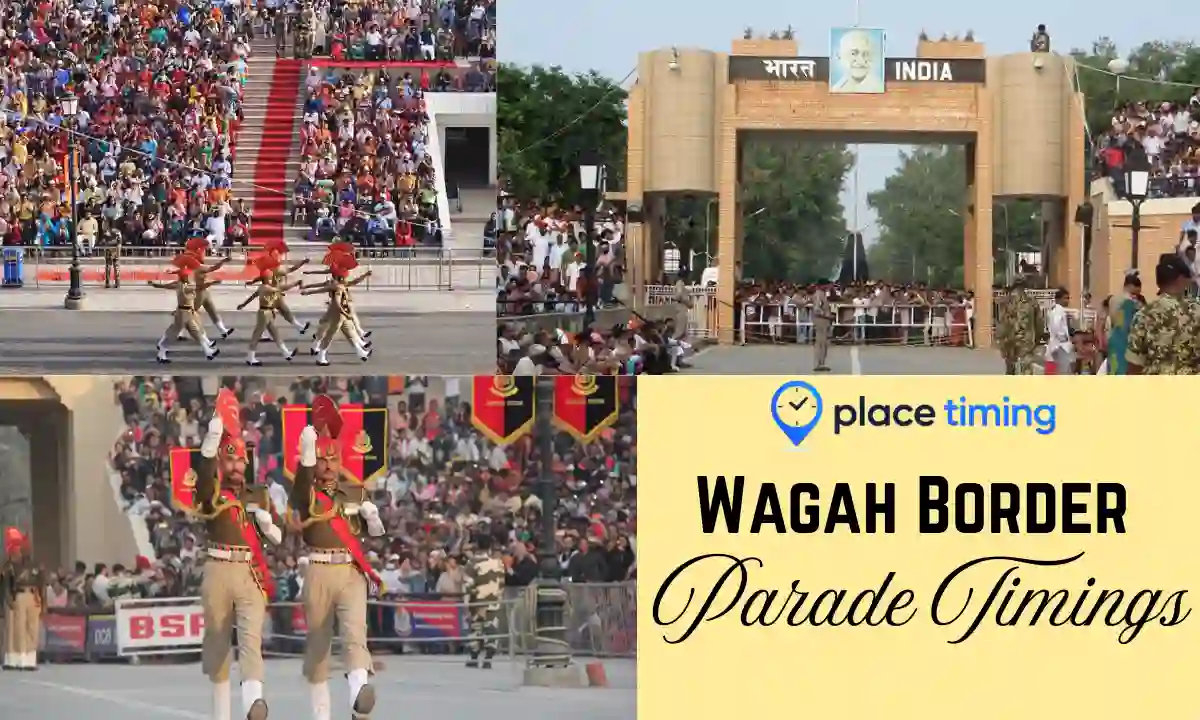
The Wagah Border parade is open to everyone free of cost, but it is not a case of arriving whenever one likes. The timing of the event varies according to seasons, seating is available on a first-come, first-served basis, bags cannot be taken in, and a large number of people assemble there long before the soldiers do. If you miss any of those points, you will end up sitting far away or not entering at all. This article will tell you everything you need to know regarding timings, what happens during the ceremony, what you should keep in mind before visiting, and how to reach the border from Amritsar.
Wagah Border Parade Timings: The Short Version
Here is the core of it. Wagah Border parade timings vary according to the time of year because the timing of the event is pegged to the sunset, while entry is free. This is the format that the Beating Retreat ceremony at the Attari-Wagah border crossing point follows. It is approximately 28 to 30 km away from Amritsar.
| Detail | At a glance |
|---|---|
| Summer ceremony (about April to September) | Starts around 5:15 PM to 5:30 PM |
| Winter ceremony (about October to March) | Starts around 4:15 PM to 4:30 PM |
| Duration | About 30 to 45 minutes |
| When to arrive | At least 1 to 2 hours early, more on weekends |
| Entry fee | Free, no ticket needed |
| Seating | First-come, first-served, and limited |
| Location | Attari-Wagah border, about 28 to 30 km from Amritsar |
Seasonal Timings: Why the Start Time Changes
This is a flag lowering ceremony, hence, it depends on sunset as opposed to a fixed time. This explains the changing starting time throughout the year. During the summer season, the starting time is between 5:15 pm and 5:30 pm since at that time the sun is setting late. During the winter season, it is between 4:15 pm and 4:30 pm.
It lasts for thirty to forty-five minutes, but the mood is created even hours before the commencement by playing patriotic songs and chanting from the crowd in the stands. Since the starting time changes and may vary, it is always advisable to check the starting time with your hotel or driver.
What Time to Arrive: The Single Most Important Tip
It is the key to make or break your whole experience. Get there an hour or two in advance, and even sooner on weekends, during holidays, and during Republic Day/Independence Day, when people start coming in droves.
The seating is in stadium style, but there isn’t much space for it. It is strictly on the basis of first come first serve. There is no system of booking for general public. The late comers either sit very far away from the parade grounds or, in the extreme case, miss the show altogether because of the stands filling up. It would be advisable to leave Amritsar around half past two to three in the afternoon.
What Happens at the Ceremony: The Beating Retreat Explained
Well, knowing the order helps you enjoy what you are seeing. Since 1959, the Beating Retreat is co-performed daily by India’s Border Security Force and the Pakistan Rangers, making it one of the longest-running daily military ceremonies anywhere in the world.
- The build-up: nationalistic songs blaring, the crowd chanting, volunteers calling on women and children along the ceremonial road to take a run with the Indian flag.
- The parade: Soldiers of both armies are out in high-octane, crisply choreographed formation; powerful jabs with exacting leg and stomps.
- The lowering of the flag: the gate opens, both flags are lowered in perfect synchronized motion and folded.
- The close: a brisk handshake between soldiers of the two sides, the gates are shut for the night, and the crowd rises for the national anthem.
Women guards of the BSF have also participated in the ceremony since 2011. One of the most striking aspects of the spectacle is that the soldiers are completely serious about these drills.
Things to Note: The Rules Before You Go
They are watertight rules, implemented at the security check and getting it wrong is also the most frequent cause for a visitor being delayed or sent back. Note every one of these.
- Bags are not allowed inside, large or small. Lockers are available near the entrance for a charge of around Rs 50 per bag, so travel light.
- No power bank and charging cable, nor a professional camera in many cases. Mobile Phones and Normal CamerasHowever, mobile phones normal cameras are normally allowed.
- Take a government-issued photo ID, foreign nationals should bring their passport too: this is helpful for claiming the separate foreign-visitor seating as well.
- Photography of the ceremony is allowed so you are free to film and take pictures during the entirety of the parade from your spot.
- The mobile network coverage on the border is either poor or non-existent so arrange a meeting point with your driver/group beforehand.
- The ceremony is subject to indefinite suspension or closing to the public, on a sudden notice, for political or security reasons and therefore check the status before planning.
As for food, there are stalls and drinking water near the entrance but inside there’s no eating so eat & drink before starting.
Seating: How to Get a Good View
Stands are stadium-style, facing the border gate and where one sits is pretty much dictated by what time you turn up.
- General seating is available to all, on a first-come and first-served basis, which means you want to arrive early in order to sit towards the front.
- Foreign-visitors area: a dedicated section that’s closer to the action, which foreigners can occupy on presentation of their passport.
- VIP or special passes: a few visitors gain front row access through official channels, but availability is not guaranteed, so hang your hat on it.
If you want atmosphere, opt for a seat as near to the central aisle and gate as possible, because that is where the soldiers march back and forth and where they lower their flags. The upper and outer stands still deliver sound in spades, albeit from a greater distance, if you make it through the gates late.
Costs: Entry, Lockers and Getting There
This is one of the cheapest world-class experiences in India, and the ceremony itself costs nothing. These figures are approximate and revised from time to time, so treat them as a guide.
| Item | Approximate cost |
|---|---|
| Ceremony entry | Free, no ticket |
| Locker for a bag | Around Rs 50 per bag |
| Bus from Amritsar to Attari | Around Rs 30 to Rs 50 per person |
| Shared taxi or auto | Around Rs 100 to Rs 150 per person |
| Private taxi or cab, return trip | Around Rs 800 to Rs 1,500, depending on the vehicle and wait |
| Small flags and snacks from vendors | Around Rs 10 to Rs 20 for a flag |
The easiest option is a private cab that waits for you and then brings you back, which can be easily set-up through a hotel. Near the Golden Temple, shared taxis are a happy medium for those on a budget, while local buses to Attari are the cheapest option.
Best Time to Visit: Season and Day of the Week
The only thing that feels like two layers of timing are the weather, and also the crowd.
- Winter (approximately from October to March): although pleasant and relatively cooler, this season contains a daytime ceremony, but nights can get really cold so wear warm.
- Summer (basically April to June): the open stands can get hot and humid, so bring water and a cap, but on the flip side more daylight means a later ceremony that is well-lit.
- Weekdays over weekends: less busy, and more likelihood of a decent seat.
The ceremony takes on a specific level of intensity and the crowds are at their biggest during Republic Day and Independence Day, so if you do visit then arrive well before dawn.
How Long to Spend: Planning Your Evening
Plan for about three to four hours in total for the day. The actual ceremony lasts thirty to forty-five minutes, but it takes about forty-five minutes each way from Amritsar, and you are supposed to be seated an hour or two before the official start.
Most visitors fold Wagah into a Golden Temple day by comfortably leaving Amritsar midday through the ceremony and returning for dinner in town late; a cushy plan.
How to Reach the Wagah Border: By Air, Train and Road
The border sits near Attari village, on the Grand Trunk Road, and is an easy trip from Amritsar.
| Mode | Details and distance |
|---|---|
| By air | Sri Guru Ram Dass Jee International Airport, Amritsar, is about 35 km from the border. |
| By train | Amritsar Junction is about 30 km away. Attari has its own small station, from where autos and rickshaws cover the last stretch. |
| By road | The border is about 28 to 30 km from central Amritsar, roughly a 45-minute to one-hour drive. Taxis, shared cabs, and buses to Attari all run from the city. |
| Local transport | Buses run to Attari, with a short auto or cycle-rickshaw ride to the entry gate. Private cabs drop you closest. |
The most convenient option is a taxi or day-cab from Amritsar that waits for you and drives you back after the ceremony, since public transport thins out once the crowd disperses.
Trivia and Lesser-Known Facts: The Wagah Border
- Since 1959, the ceremony has been performed every day – missing very few during decades of shifting political fortunes.
- The village on the Indian side is Attari and on the Pakistani side it is Wagah, therefore this crossing is called as Attari-Wagah.
- It is also the only road border crossing between Indiam and Pakistan.
- The BSF has had women guards participating in the ceremony since 2011.
- The grandstands supporting both sides are mirror images, enabling each crowd to see and hear the other.
- The time for ceremony is timed to sunset, and this mean that during summer months the start of ceremony starts before the sun sets where as in winter it is opposite.
Nearby Attractions: What to Combine With Your Visit
Wagah goes hand in hand with the other attractions of Amritsar, most of which you can visit earlier on the same day.
- The Golden Temple: Amritsar’s spiritual center and our first stop on the way to or from the border.
- Jallianwala Bagh: the Memorial Garden right next to the Golden Temple.
- Partition Museum: This is an emotion museum based on the happenings of 1947, which makes sense of the border.
- Khalsa College: a very impressive looking heritage campus that you see on the road to the border.
Quick Tips: Making Your Wagah Border Visit Work
- Get there one to two hours before hand, even earlier for Saturdays and national holidays.
- Pack light – bags are not allowed and lockers cost about Rs 50.
- Leave your powerbanks behind, carry a photo id or Passport(If you are an international traveller).
- In winter, wear warm clothing; in summer, take water and a cap as the bleachers are outdoors.
- As mobile coverage near the border is sparse, arrange with your driver on where to meet.
- The ceremony may be suspended at short notice so before you travel, check the current situation.
Final Take: Planning Your Wagah Border Visit
Wagah Border parade is free, memorable and completely time bound. In summer the ceremony commences at approximately 5:15 PM; in winter around 4:15 PM as it is linked to sunset, and lasts for thirty to forty-five minutes. The one rule we deem most important is to get there early, and when I say early, at least a hour or two because seats are limited and first come first serve.
Pack light as bags are not allowed inside so carry a photo ID and leave your power banks at your hotel. You can book a waiting cab from Amritsar, do the Golden Temple leg earlier in the day, and ensure the ceremony is on before departure (it can be cancelled at short notice). Nail the fundamentals and you will have a great view, front-row seats for one of daily life?s most spectacular spectacles in this country.
Frequently Asked Questions
What are the Wagah Border parade timings?
The ceremony starts around 5:15 PM to 5:30 PM in summer and around 4:15 PM to 4:30 PM in winter, since it is timed to sunset. It lasts about thirty to forty-five minutes. Confirm the exact time locally on the day, as it shifts through the year.
Is there an entry fee for the Wagah Border ceremony?
No. Entry is completely free and no ticket is needed. Seating is first-come, first-served and limited, so the only cost is a locker for your bag, around Rs 50, and your transport from Amritsar.
What time should I arrive at the Wagah Border?
Arrive at least one to two hours before the ceremony starts, and even earlier on weekends, holidays, and around Republic Day. Seating is limited and first-come, so latecomers sit far from the action or may not get in.
Are bags allowed at the Wagah Border ceremony?
No. Bags are not allowed inside, large or small. Lockers near the entrance take them for around Rs 50 per bag. Power banks and charging cables are also not permitted, though mobile phones and ordinary cameras generally are.
Can I take photos at the Wagah Border parade?
Yes. Photography of the ceremony is permitted, and you can film and photograph the parade from your seat with a phone or an ordinary camera. Professional camera equipment may be restricted.
Do I need to book tickets for the Wagah Border ceremony?
No. There is no booking system for general visitors. You simply arrive, pass the security check, and take a seat on a first-come basis, which is why arriving early matters so much.
How do I reach the Wagah Border from Amritsar?
The border is about 28 to 30 km from Amritsar, roughly a 45-minute to one-hour drive. Private cabs that wait and return are the most convenient, shared taxis cost around Rs 100 to Rs 150 per person, and local buses to Attari are the cheapest option.
What is the best time of year to visit the Wagah Border?
Winter, from about October to March, brings pleasant weather and a daylight ceremony, though the evenings turn cold, so dress warmly. Summer is hot in the open stands. Weekdays are far less crowded than weekends and national holidays.
Also read about: Tirumala Ghat Road Timings: Toll, Rules, Deals and a Complete Guide




Leave a Reply