
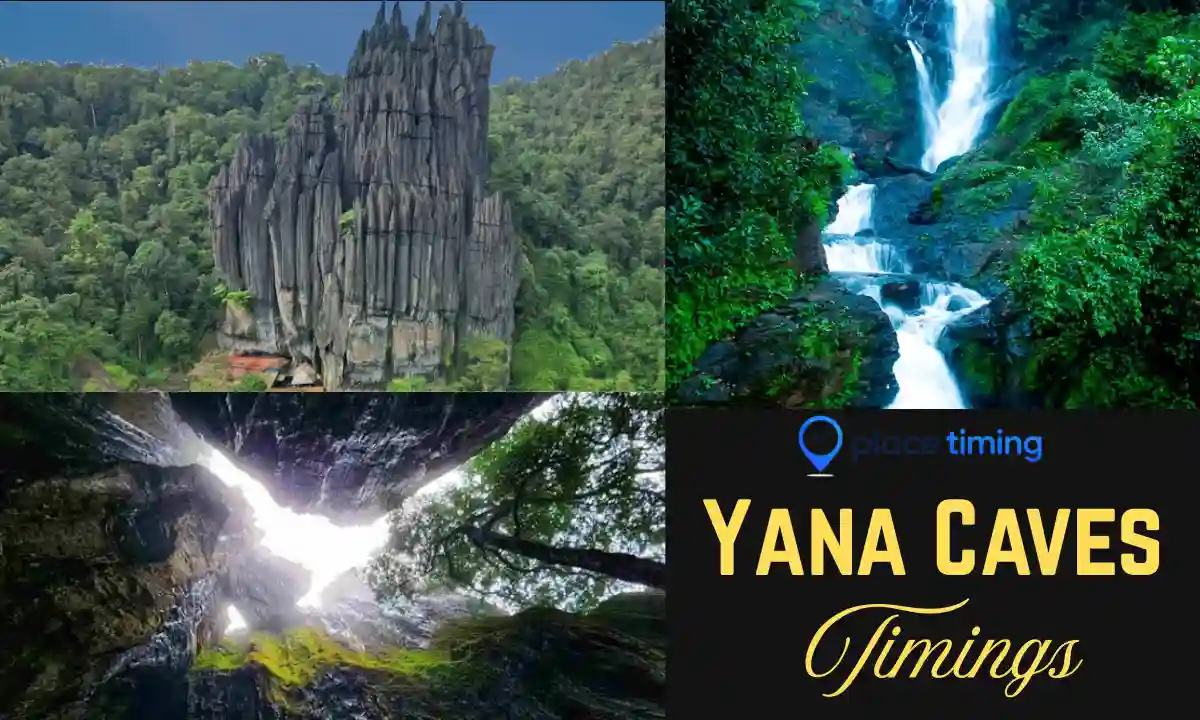
Yana is not a cave in the conventional view of that, but rather two towering black rock monoliths set deep within the Western Ghats, accessed by a short undergrowth trek. It’s not only the timing that counts here, as if it is dark inside the dense forest or heavy monsoon rain can make it unsafe and shut this trail. If you get there with enough daylight left and on dry footing, it is one of the most impressive sights in Karnataka. This guide will talk about the timings, entry and parking charges, the trek, the legend behind it, and nearby waterfalls/towns.
Yana Caves Timings: The Short Version
Here is the core of it. Yana Caves timings operate during daylight hours, with direct access generally being a short trek through the forest to reach the two titanic rock features. The pattern below is the same at this site in Yana village, Uttara Kannada district, Karnataka. The trail may be closed due to heavy monsoon rain, so check before doing.
| Detail | At a glance |
|---|---|
| Open | Daily, commonly cited as 6:00 AM to 6:00 PM, with entry to the site by about 8:00 AM to 6:00 PM |
| The trek | About 30 to 45 minutes from the parking area, roughly 0.5 to 3 km by route |
| Entry fee | Free or a nominal Rs 5 |
| Parking | Around Rs 20 for bikes, Rs 40 to Rs 50 for cars |
| Best time | Early morning, and the months of October to March |
| Time to spend | 2 to 3 hours including the trek |
| Location | Yana village, between Kumta and Sirsi, Uttara Kannada |
Opening Hours and Why Daylight Matters
The site is open every day. Normal opening hours are from early morning until about six in the afternoon, and ticketed entrance to the caves is usually open from around eight in the morning through until six at night. The only question that can be practical for the visit is how long one can do in daylight, given that it involves a forest trek rather than any kind of gate time.
Leave no later than mid-afternoon in order to make it back before darkness descends, as the path through the forest is unlit, and the canopy blocks out light soon after sunset. Since the rains turn the way slippery and many places are also entry-locked during heavy rain for safety reasons, it is advisable to check conditions locally before heading out in monsoon.
Entry Fee and Parking: What You Pay
Yana is one of the most affordable sights in the region, since the site itself is essentially free. The figures below are approximate and revised from time to time, so confirm on arrival.
| Item | Approximate cost |
|---|---|
| Entry to the caves | Free, or a nominal Rs 5 |
| Parking for two-wheelers | Around Rs 20 |
| Parking for cars | Around Rs 40 to Rs 50 |
| Guide, if hired | Charged separately, negotiable |
| Refreshments at the base | Small stalls near the parking and trail |
There is little else to spend on, so the main costs are your transport to Yana and the parking. Carry small cash, since card facilities are not reliable in this remote spot.
The Trek: What to Expect on the Trail
The walk to the rocks is at the centre of a Yana visit and it is feasible for most. A clearly signed trail leads from the parking lot through dense pine forest to the base of the monoliths in thirty to forty-five minutes at an easy pace.
- The trail is mostly through the shade, with streams and small waterfalls along the way, and abundant birdlife among the canopy.
- A flight of about two hundred steps near the rocks rises to the foot (base) temple in the cave by the foot of the taller monolith.
- The route is well signposted and described as easy-moderate, ideal for beginners or families who are reasonably fit.
- The trail can easily become a treacherous mire during the monsoon because the forest is at its beautiful best but also keep very muddy/slippery thus be careful while treading.
Wear shoes with grip, have plenty of water and walk very slowly over the steps as some are a bit slippy too if wet.
The Two Shikharas and the Cave Temple: What You See
The reason for visiting the place is the two huge, rugged rock structures rising up vertically from the green foliage like nowhere else in South India.
- Bhairaveshwara Shikhara: The larger rock structure about 120 meters tall and a representation of Lord Shiva, with a cave temple at its base.
- Mohini Shikhara: the other rock structure, next to Bhairaveshwara Shikhara, which is a representation of Mohini form of Vishnu.
- The Cave temple: A Shiva temple located below Bhairaveshwara Shikhara where a self-originated or a Swayambhu Lingam is worshiped with continuous dripping of water.
The rocks are made up of black crystallic karst limestone, a rare landscape in India and developed through millions of years. This stark contrast between the dark rocks and lush forest of Sahyadri range makes the place so photogenic and unique.
The Legend: Bhasmasura and the Mohini Avatar
The legend of Yana is as exciting as the rocks themselves. As per folklore, the demon Bhasmasura did severe penance to get a boon from Lord Shiva, which stated that whosoever’s head he would touch will turn into ashes. Bhasmasura, being power-hungry, used this boon on his own creator, Shiva.
Shiva ran away from there hiding himself in the caves of what is known as Bhairaveshwara Shikhara today. In order to rescue Lord Shiva, Lord Vishnu appeared in the form of Mohini, the graceful dancer and challenged the demon to a dance. Bhasmasura enchanted by her dancing moves followed each move of hers and when she touched her own head he did the same and turned into ashes. The excessive heat generated due to the above incident is responsible for the blackening of the rock and two shikharas symbolize Shiva and Mohiniavatar of Vishnu respectively.
Which Month to Visit: A Season Guide
The season shapes the whole experience, from the trail underfoot to the forest around you.
| Period | What it is like | Verdict |
|---|---|---|
| October to March, winter | Pleasant, cool weather, fresh forest, dry and safe trail | The best overall window |
| June to September, monsoon | Lush and magical, but muddy, slippery, and sometimes restricted | Beautiful but tricky |
| April to May, summer | Hot and humid, tiring on the trek | Best avoided |
| Maha Shivaratri, Feb or Mar | The big pilgrimage festival, ten days of celebration | Spiritually special but crowded |
The obvious choice would be from October to March when the climate is favorable, and the trekking route is both safe and dry. It rains heavily during the monsoon, making the forest look spectacular and the route dangerous; besides, it gets closed in case of heavy rainfall, whereas it becomes hot during the summer months. For a spiritual experience, Maha Shivaratri is the time for the temple.
Things to Note and What to Carry
- In the forest trail and on the steps (which can be very slippery when wet) wear solid shoes with grip.
- Take water and some snack, many options at the site of this.
- During the rainy season months, bring a hat, sunscreen and also roll up coat.
- Have small cash on hand for parking and something to drink because digital payment does not work here.
- Get a move on early enough that you can finish and come back in the daylight because the forest gets dark very quickly.
- Do not litter, respect the sacred place and the forest, do not leave the designated path.
On the shrine site, modest dress is suitable and shoes are removed before going into the cave temple.
How Long to Spend: Planning Your Visit
Most people allow about two to three hours for Yana, which allows time for the trek in and out as well as exploring around the rocks and temple. So for casual photographers and temple gawkers, maybe a little more time.
Yana’s location, situated between the coast and the hills means it enjoys an inherent pairing with other locations in the area, which is why most visitors work it into a broader day where they may visit a nearby waterfall or add on time at Sirsi.
Nearby Places to Combine With Your Visit
Yana rests in one of Karnataka’s prettiest belts, with a string of enticing pitstops within spitting distance.
- Vibhooti Falls: An amazingly gorgeous multi-tier waterfall adjacent to the famed Yana create one of the most natural matches, especially in monsoons.
- Sirsi: the 40 km away hill town is also popular for the famous Marikamba Temple and acts as one of the good base region.
- Kumta and the coast The coastal town about 25 to 30 km from here with beaches and the road to Gokarna.
- Gokarna: the temple cum beach town around 50 km away, is a common longer itinerary as well.
- Dandeli and Yellapur: The forest and adventure belt north; waterfalls, wildlife.
A popular plan combines Yana with Vibhooti Falls in a single half-day, and a longer trip links Yana with Gokarna’s beaches or the Sirsi and Yellapur waterfalls.
How to Reach Yana Caves: Air, Rail and Road
Yana is remote, reached by road through the Western Ghats, with the last stretch on foot.
| Mode | Details and distance |
|---|---|
| By air | Hubli airport is about 100 to 140 km away, and Goa’s Dabolim airport about 140 km, with taxis onward. |
| By train | Kumta is the nearest railway station, about 25 km away, with Ankola and Karwar as alternatives. |
| By road | Yana is about 25 km from Kumta, 40 km from Sirsi, and 50 km from Gokarna, with buses and taxis on these routes. |
| The final stretch | The last part of the road ends at a parking area, from where the site is reached on foot through the forest. |
Many visitors rent a bike or hire a taxi from Gokarna or Kumta, since public transport is limited and the final forest road is narrow, so drive cautiously on the last stretch.
Trivia and Lesser-Known Facts: Yana Caves
- Two rock formations that compose of the black crystalline karst limestone — a rare format in India.
- The Bhairaveshwara Shikhara is approximately 120 metres tall and to its side, the Mohini Shikhara.
- The cave temple has a Swayambhu, i.e., self-manifested, Shiva Lingam with water dripping over it ceaselessly.
- Deep in the Western Ghats, Yana lies in one of the wettest inhabited regions on the planet.
- Legend has it that the blackened rock belongs to Bhasmasura, a demon who met his end when he was engulfed in flame.
- One of them being Maha Shivaratri which celebrates one the biggest fests, it stretches for about 10 days at this location.
Quick Tips: Making Your Yana Caves Timings Work
- Make sure to start your trek by mid-afternoon at the latest so that you get the return journey completely in daylight.
- For dry the driest trail & safer conditions, visit October to March for better weather.
- The steps and trail is slippery when wet, so wear shoes with grip.
- Bring water, small change for parking and a rain coat in the wetter months
- Heavy rainfall can prevent entry to the area, so check conditions ahead of a monsoon visit.
- Combine the trip with Vibhooti Falls or Sirsi if you have to spend a complete day.
Final Take: Planning Your Yana Caves Visit
Yana has an opening time from dawn until around 6:00 PM which means you can do the visit truly it involves a thirty to forty-five minutes short forest trek followed by two tall, spectacular black rock monoliths along with Swayambhu Shiva temple. While entry is free or Rs 5 token, there is only a minimal parking fee e.g. PoA if you go by vehicle – but the largest cost is getting there. Since the trail goes through unlit forest (and darkness falls mega fast out there) make sure you begin well enough in advance to return before dark.
Visit between October and March for a dry, safe trail and favourable weather; wear appropriate footwear; and bring water and small currency. The forest is magical during the monsoon however we often have to work through a wet and very slippery mud path, if not actually closed at times, so walking within the exciting surroundings qualities its conspiracy in summer time is boredom. With a stop-off at either Sirsi or Gokarna, or tag-team Yana with the nearby Vibhooti Falls – and if you want to see the spiritual side working at its liveliest, plan your visit for the ten-day Maha Shivaratri festival.
Frequently Asked Questions
What are the Yana Caves timings?
Yana Caves is open daily, commonly cited from around 6:00 AM to 6:00 PM, with ticketed entry to the site generally from about 8:00 AM to 6:00 PM. Since the visit involves a forest trek, plan to finish in daylight. Heavy monsoon rain can restrict entry.
What is the entry fee for Yana Caves?
Entry is free or a nominal Rs 5. Parking is around Rs 20 for two-wheelers and Rs 40 to Rs 50 for cars. There is little else to pay for, so carry small cash for parking and refreshments, since digital payment is unreliable.
How long is the trek to Yana Caves?
The trek from the parking area to the rock formations takes about 30 to 45 minutes through shaded forest, with roughly two hundred steps near the rocks up to the cave temple. The trail is well-marked and considered easy to moderate, suitable for beginners with reasonable fitness.
What is the best time to visit Yana Caves?
October to March, the winter season, is the best time, with pleasant weather and a dry, safe trail. The monsoon, June to September, makes the forest lush but the path slippery and sometimes restricted, and summer is hot and draining.
What is special about Yana Caves?
Yana has two massive black karst-limestone monoliths, Bhairaveshwara Shikhara, about 120 metres tall, and Mohini Shikhara, rising from dense Western Ghats forest, a rare topography in India. A cave temple at the base holds a self-manifested Shiva Lingam with water dripping over it.
What is the legend of Yana Caves?
Legend says the demon Bhasmasura, granted a boon to turn anyone to ashes with a touch, tried it on Shiva, who hid in the Yana caves. Vishnu, as the enchantress Mohini, tricked the demon into placing his hand on his own head, turning him to ashes, and the two rocks represent Shiva and Mohini.
Are there waterfalls near Yana Caves?
Yes. Vibhooti Falls, a scenic multi-tiered waterfall, is the closest and most popular pairing, especially after the rains. The Sirsi and Yellapur belt to the north also has several waterfalls, and Gokarna’s beaches are about 50 km away.
How do I reach Yana Caves?
Kumta is the nearest railway station, about 25 km away, and Hubli and Goa airports are the nearest, roughly 100 to 140 km off. Yana is about 25 km from Kumta, 40 km from Sirsi, and 50 km from Gokarna by road, with the final stretch reached on foot through the forest.
Also read about: Banke Bihari Mandir Vrindavan Timings: Darshan, Temple Circuit and Full Guide




Leave a Reply