
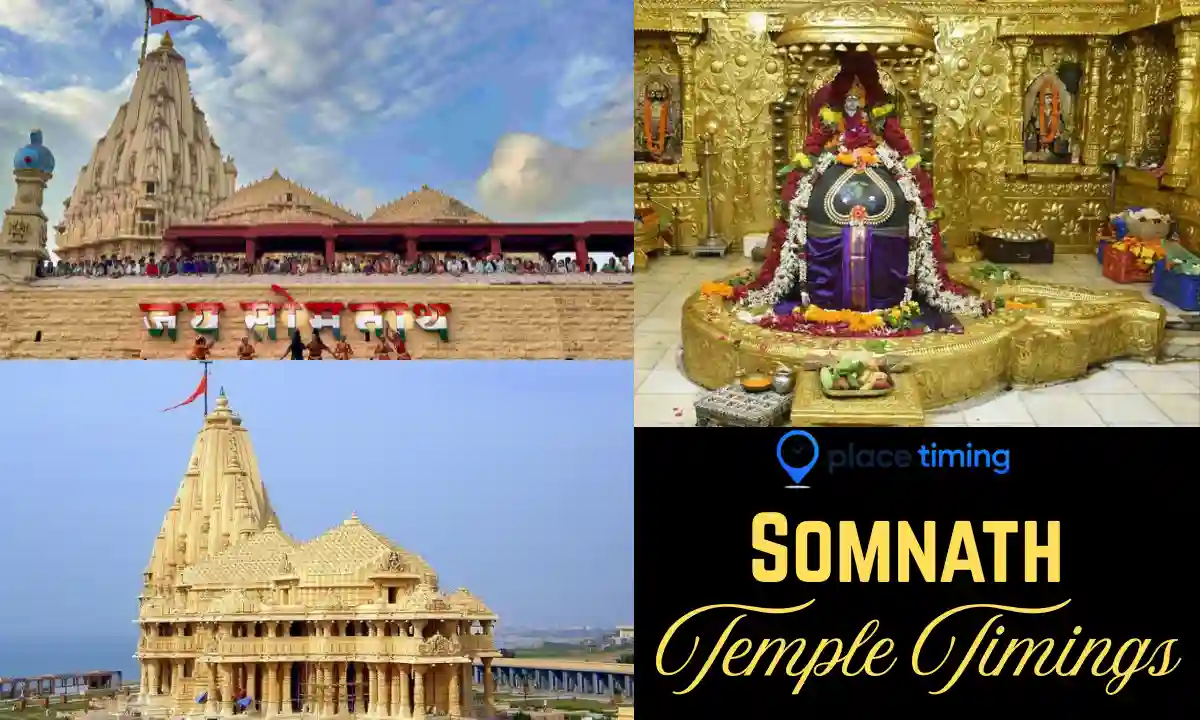
Somnath Temple is one of the most magnificent Hindu temples dedicated to Lord Shiva, also known as which is an iconic symbol of the spiritual and cultural heritage of India. This holy shrine, situated at Prabhas Patan near Veraval in Gujarat, is said to be the first of the twelve Jyotirlingas of lord shiva. Each year, millions of pilgrims and tourists flock to the temple to seek blessings, behold its stunning architecture, and discover its captivating history.
The notable uniqueness of Somnath Temple is its own journey in time. Though it has suffered periods of destruction and reconstruction over the many centuries, it still remains a symbol of faith, hope, and devotion. This article includes all that you need to know about Somnath Temple timings, history, religious significance, architecture, and visiting details.
Somnath Temple History
The history of Somnath Temple dates back thousands of years and is deeply connected with Hindu mythology and ancient Indian civilization. According to religious beliefs, the temple was originally built by Soma, the Moon God, in gold. Later, it was rebuilt in silver by Ravana, in sandalwood by Lord Krishna, and finally in stone by King Bhimdev.
Historically, Somnath has been one of India’s most prosperous pilgrimage sites. Due to its immense wealth and religious significance, the temple attracted several foreign invaders. Despite repeated destruction, devotees and rulers continued rebuilding it, making Somnath a powerful symbol of unwavering faith and cultural pride.
Why Is Somnath Temple So Famous?
Somnath temple is an important pilgrimage of India for many reasons.
- One of the twelve Jyotirlingas, or sacred lingas across India.
- For Hinduism, it is the holiest temple.
- Invasions through history have seen it rebuilt and symbolise resilience.
- The views are remarkable given where it is located, right on the Arabian Sea.
- The temple features Chalukya-style architecture that adorns it in grandeur, which attracts visitors from all parts of the world.
- It is intricately linked to the last earthly presence of Lord Krishna near Prabhas Patan.
Now, Somnath is not only a place for pilgrimage but a historical and architectural monument as well.
The Legend of Lord Soma (Moon God)
As per Hindu mythology, this temple gets its name from Soma (Moon God). Soma was romantically involved with the twenty-seven daughters of King Daksha but was in love with the one named Rohini. This favoritism did not please Daksha, and he cursed Soma to be deprived of all brightness.
Soma did the penance and worshipped Lord Shiva at Prabhas Kshetra to seek relief from his curse. Lord Shiva was so satisfied with his worship that he lifted part of the curse so that the moon would grow and shrink during each month. The Jyotirlinga was set up in the original Somnath Temple built by Soma.
According to Hindu mythology, this legend addresses the origin of both the name of the temple and the principles behind lunar cycles.
Ancient History of Somnath Temple
Somnath Temple was described in detail in some ancient texts such as Skanda Purana, Shiva Purana, and Bhagavata Purana. It has been one of the greatest religious centers as well as a site of pilgrimage since long before the Common Era.
Temple was, after several donations given by kings and merchants, became the richest place of worship in western India according to historical records. Its geographic position along ancient trade routes only added to its wealth.
Somnath remained both a hub of faith and an epitome of India’s cultural wealth for the past few centuries.
Destruction and Reconstruction Through the Centuries
Somnath Temple has a history of being broken down and rebuilt. The most notable attack was conducted in 1025 CE by Mahmud of Ghazni when he invaded the temple, looted its wealth and razed the shrine to the ground. In subsequent centuries, the temple was assaulted during various invasions.
However, several Hindus rebuilt the temple, retaining its sacred nature. The fact that Somnath had to be rebuilt so many times is testimony to the devotion of devotees not allowing their place of worship to fade away.
The temple is today a monument to endurance, reverence and the unbroken Indian culture.
Modern Reconstruction of Somnath Temple
Since India attained independence, efforts have been made to rebuild the Somnath Temple. The post of the centre was started by Sardar Vallabhbhai Patel in 1947.
The current temple in sandstone in the traditional Chalukyan style. Completed in 1951, the temple was also ceremonially opened by Dr. Rajendra Prasad, India’s first President.
Now, the 20th-century Somnath Temple is both a representation of India’s spiritual traditions and of a commitment not to forget history.
Religious Significance of Somnath Temple
The temple is one of the most revered Shiva temples in all of Hinduism. Devotees say that praying here removes bad karma, ushers in serene inner peace, and gets one closer to spiritual development.
Somnath is also a pilgrimage destination where pilgrims from various parts of India visit the temple to offer prayers, seek blessings for prosperity and health with several religious ceremonies throughout the year. This temple sees heavy footfall during Mahashivratri and the holy month of Shravan.
One of the 12 Jyotirlingas
Somnath is said to be the first among all twelve Jyotirlingas. In Hinduism, a Jyotirlinga is a pillar of light that appears so divine and represents the infinite self-manifestation of Shiva. Devising Jyotirlingas are highly manifested pilgrimage sites, and Somnath is the wish-granted starting point of millions.
Due to this, Somnath is highly significant in Shaivism.
Importance in Hindu Scriptures
Somnath temple is described in literature and texts such as Shiva Purana, Skanda Purana and Bhagavata Purana, among others. They highlight Prabhas Kshetra to be a holy place where dedicating oneself to worship Lord Shiva grants liberation and merit in the spiritual field.
This temple is also related to Lord Krishna, as near this place there is another place called Bhalka Tirth, where the last corporal moments of Lord Krishna are considered to have taken place before returning to his divine abode. The religious importance of the temple has also been reinforced through these scriptural references.
Spiritual Beliefs Associated with the Temple
One of the most reputed temples in India with history, devotees believe that offering prayer at Somnath Temple solves so many problemslyhhomesve obstacles and sanctify all sins would lead to peace and prosperity. Most of the pilgrims perform special pujas like Rudrabhishekto to wish for good health, success and wellness of family members by Lord Shiva.
Meditating inside the temple is also said to be spiritually uplifting due to the sacred environment and hundreds of years of worship.
Somnath Temple Architecture
The current Somnath Temple represents the height of traditional Hindu temple architecture. Constructed from honey colored sandstone, the temple features ornate carvings, beautiful pillars, and lofty spires skillfully formed.
The design embodies the Chalukya style characterized by symmetry, intricate artistry, and religious symbolism. Set against the sprawling Arabian Sea, it adds to its beauty.
Temple Design and Style
The Kailash Mahameru Prasad style of Chalukyan architecture is adopted here at Somnath, where the temple follows. The height of the temple is around 155 feet, and its grand flag on top of the main shikhara is replaced numerous times daily in a ceremonial practice.
The walls are engraved beautifully with carved deities, floral motifs, and mythological themes, which display the craftsmanship of Indian artisans.
Main Sanctum (Garbhagriha)
Here in the Garbhagriha, the Shiva Jyotirlinga is located as deity of worship. Devotees go inside the sanctum with utmost reverence to pray and give flowers & holy water.
The stillness of the sanctum creates a sacred space and is considered the essence of the temple.
Sabha Mandap and Other Structures
Sabha Mandap: The main prayer hall of the temple, where devotees assemble for bhajans, discourses and temple-related ceremonies. The hall is built with a spacious area and carvings on pillars and other traditional architecture.
The rest of the temple complex also has prayer areas, administrative offices, gardens and lodgings for pilgrims to make their visit more comfortable.
The Arrow Pillar (Baan Stambh)
The Arrow Pillar or Baan Stambh, located at the sea-facing side of Somnath Temple, is one of its most interesting features.
It reads on the pillar that no land lies between here and the South Pole in a straight line over ocean. This particular geographical location also plays the role of a landmark of the specific coastal area where the temple is located, and has become a popular tourist attraction as well.
Somnath Temple Location
The Somnath Temple is located in the Prabhas Patan area, near the town of Veraval in the Gir Somnath district of Gujarat, India. The location of the temple along the Arabian Sea gives it nice view along the coast line which is sure to add some spirituality to the temple.
Distance of Temple from nearby places:
- Distance from Veraval Railway Station – 7 km(approx)
- Distance from Diu Airport – 85 km(approx)
- Distance from Ahmedabad – 410 km
How to Reach Somnath Temple
Somnath Temple is easily accessible and well connected via air, rail and road.
By Air
Diu Airport is the nearest airport and situated at around 85 km from Somnath Temple. There are now scheduled flights into Diu and cities such as Mumbai. Travel and How to Get ThereFrom the airport, visitors can either order a taxi or take a bus up to the temple.
Travelers can, however, achieve better flight connectivity from Rajkot International Airport or Ahmedabad Airport which operate domestic trips regularly.
By Train
Somnath Railway Station is the nearest railway station which is located just 1 km away from this temple. Located about 7 km away is the other main railhead,Veraval Railway Station which also has direct trains services from various cities likeAhmedabad, Rajkot, Surat, Mumbai etc.
There will be a whole bunch of auto-rickshaws and taxis just outside both the stations.
By Road
Somnath has a very good road connectivity with Gujarat Highway Road network. GSRTC and private buses run normal services from Ahmedabad, Rajkot, Junagadh, Dwarka Bhavnagar and other major cities.
By car, one can have a pleasant drive along well-maintained roads and fairly picturesque coastal scenery.
Somnath Temple Nearest Railway Station
Although Somnath Railway Station is the closest, Veraval Railway Station is the primary station serving most long-distance trains.
| Railway Station | Distance from Temple |
|---|---|
| Somnath Railway Station | About 1 km |
| Veraval Railway Station | About 7 km |
Both stations offer easy access to the temple through taxis, auto-rickshaws, and local transport.
Somnath Temple Timings
The Somnath Temple is open every day of the week throughout the year. Visitors are encouraged to arrive early, especially on weekends, public holidays, and during major festivals, to enjoy a smoother darshan experience.
| Activity | Timings |
|---|---|
| Temple Opening | 6:00 AM |
| Temple Closing | 10:00 PM |
| General Darshan | 6:00 AM – 10:00 PM |
| Morning Aarti | 7:00 AM |
| Midday Aarti | 12:00 PM |
| Evening Aarti | 7:00 PM |
| Sound & Light Show (“Jay Somnath”) | Around 8:00 PM – 9:00 PM |
Best Time to Visit Somnath Temple
Somnath Temple is open to visitors 12 months a year and is ideally visited between October to March. The pleasant and cool weather during these months makes it ideal for sightseeing and temple visits.
This Temple is also visited by devotees at Mahashivratri and in the holy month of Shravan, when the temple is grandly decorated, and special religious functions are held. However, these periods also witness large crowds.
Entry Fee and Visitor Information
One of the best things about visiting Somnath Temple is that entry and general darshan are completely free.
| Details | Information |
|---|---|
| Temple Entry | Free |
| General Darshan | Free |
| Mobile Phones | Not Allowed Inside |
| Photography | Prohibited Inside the Temple |
| Parking | Available Near the Temple |
| Wheelchair Facility | Available |
Visitors can safely deposit mobile phones, cameras, and electronic items at designated cloakrooms near the entrance.
Dress Code and Temple Rules
There is no formal dress code as such but it does require modest and respectful attire in line with a place of worship.
Some important temple rules include:
- Wear clean and decent attire.
- Footwear is to be taken out with before entry into the temple.
- No Mobile Phones or cameras are allowed inside.
- Be quiet and ceremonial in their worship
- Do not bring anything into the temple that you are not allowed to.
- Follow the instructions of temple authorities and security staff.
Following these guidelines ensures that the temple remains a peaceful and sacred environment.
Festivals Celebrated at Somnath Temple
Many Hindu Festivals are celebrated in Somnath with great reverence so, thousands of pilgrims come to the temple from all over India.
Mahashivratri
The temple’s biggest festival is that of Mahashivratri. Devotees conduct special pujas, Rudrabhishek, bhajans and perform night-long prayers to seek Lord Shiva’s blessings.
Kartik Purnima
Devotees bathe at Triveni Sangam on Kartik Purnima before paying homage to the temple. This day is extremely pious and serves as a medium for spiritual cleansing.
Shravan Month Celebrations
For Shiva devotees, the month of Shravan (Sawan) is of particular significance. Larger crowds visit the temple on Mondays, when thousands of devotees come for Jal Abhishek and to offer Bilva leaves followed by special aartis.
Daily Rituals and Puja at Somnath Temple
The daily worship at Somnath Temple starts very early in the morning and goes on throughout the day. Traditional Vedic rituals are conducted in temples by priests, beginning with Abhishek and Rudrabhishek followed by Aarti, flower offerings and placing of Bilva leaves milk during the watching and drinking ritual in respect of the Shiva Linga. Special pujas for health, prosperity, peace and spiritual well-being can also be undertaken by devotees or can also be sponsored.
One of the most popular rituals is the evening aarti, which attracts many devotees who come in particularly to witness these chants and enjoy the peaceful ambiance of the temple.
Online Darshan, Puja Booking, and Donations
Any devotee interested but unable to personally turn up can avail of a number of services on the official Somnath Temple web site. These include:
- Online puja booking
- Donation services
- Live darshan during special occasions
- Informs about different festivals and temple dhamakas
Devotees across the globe can stay connected with their temple and contribute to its religious and charitable functions through online services.
Places to Visit Near Somnath Temple
Somnath Temple is surrounded by other historic and religious attraction of the area, which allow you to experience the historic memorials.
Triveni Sangam
The holy confluence of Hiran, Kapila and the mythic river Saraswati. Here pilgrims take a holy dip and then enter the temple.
Bhalka Tirth
An important pilgrimage centre where Lord Krishna is said to have been hit by an arrow and left his earthly life.
Dehotsarg Tirth
An ancient site also believed to be a sacred one marking the place of Lord Krishna entering his eternal abode. Known to be a very calm and quiet place with immense spiritual value.
Somnath Beach
Adjacent to the temple, Somnath Beach is well-known for its scenic views of the Arabian Sea, sauna-like atmosphere and breathtaking sunsets.
Prabhas Patan Museum
It displays some ancient sculptures, inscriptions, and archaeological remains that relate to the Somnath Temple.
Accommodation Near Somnath Temple
Somnath also has a range of accommodation choices for all types. There are temple guest houses, budget lodges, mid-range hotels, and premium resorts available within close proximity of the temple for visitors.
The Shree Somnath Trust also runs clean, free or low-cost guest houses for pilgrims; Tourists crowd into the area for Mahashivratri and the Shravan month, so it is better to book hotels well in advance.
Interesting Facts About Somnath Temple
- Somnath is said to be the first Jyotirlinga of lord Shiva.
- It has been destroyed and rebuilt numerous times over the years.
- The current structure was rebuilt after India gained independence with Sardar Vallabhbhai Patel overseeing the project.
- The world renowned Baan Stambh (Arrow Pillar) which states absolutely there is no land between Somnath and the South Pole with a straight line passing across the ocean.
- It stands on a cliff faced with the Arabian Sea, providing sights to behold of unequaled coastline.
- Every year millions of devotees visit Somnath especially on the occasion of Mahashivratri and Shravan.
Tips for First-Time Visitors
Keeping in mind the tips below, you can make your visit comfortable and memorable:
- Get there early, the crowds are unreal.
- Wear modest and comfortable clothing.
- Have a valid idea-proof only if required.
- Mobile phones and cameras need to be deposited at the counters.
- Stay hydrated, especially during summer.
- The full experience also includes attending the evening aarti and the Sound and Light Show.
- If you wish to enrich the experience of your pilgrimage, do not forget to visit nearby attractions like Triveni Sangam and Bhalka Tirth.
Conclusion
Somnath Temple is not merely a temple, but a testament to belief, hope and reacquisition of India’s glorious tradition. The temple, one of the first Jyotirlingas of Lord Shiva, has been an inspiration for millions over centuries with its compelling history, stunning architecture and religious significance.
Somnath makes for a good trip whether it is pilgrimage, historical exploration or cultural tourism. Whether it is in its pristine coastal surroundings or ancient folklore, daily practices or nearby charms, the temple will continue to shine as one of India’s most envied spiritual locations. Your journey through Somnath, therefore, is not just a pilgrimage but also an insight into the history of one of the most religious sites for Hindus.
Frequently Asked Questions
Is Somnath Temple one of the 12 Jyotirlingas?
Yes. Somnath is believed to be the first of the twelve Jyotirlingas dedicated to Lord Shiva.
Where is Somnath Temple located?
The temple is situated in Prabhas Patan, near Veraval, in the Gir Somnath district of Gujarat.
What are the temple timings?
Somnath Temple is generally open daily from 6:00 AM to 10:00 PM.
Is there any entry fee?
No. Entry to the temple and general darshan are completely free of charge.
Are mobile phones allowed inside the temple?
No. Mobile phones, cameras, and other electronic devices are not permitted inside the temple premises.
Which is the nearest railway station?
Somnath Railway Station is the closest, while Veraval Railway Station is the main railway station serving long-distance trains.
What is the best time to visit Somnath Temple?
The ideal time to visit is between October and March, when the weather is pleasant.
Also read about: ISKCON Temple Timings: Opening Hours, Aarti Schedule, Darshan Time & Visitor Guide



Leave a Reply