
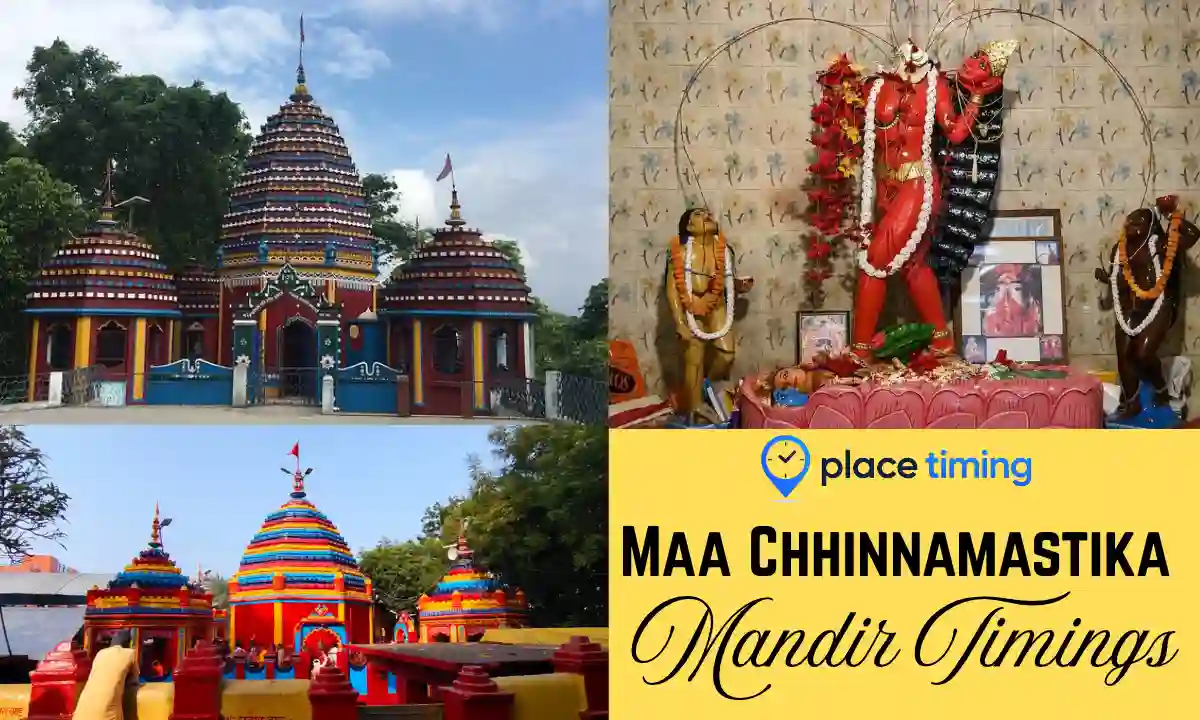
In the confluence point of the Bhairavi and Damodar rivers in the district of Ramgarh in Jharkhand stands one of the most potent but least known tantric shrines in India – the Maa Chhinnamastika Mandir in Rajrappa. The goddess worshipped here is remarkable for Indian iconography in many ways, and this shrine has some unique hours of operation that depend on the season. Those interested in knowing the maa chhinnamastika mandir timings must keep in mind that there are differences between the summer and winter timetables and a few other dates when the timings are changed. Here is all you need to know about the maa chhinnamastika mandir timings by season, the remarkable goddess, and how to reach Rajrappa from Ranchi.
Maa Chhinnamastika Mandir Timings at a Glance
Here is the quick view before the season-by-season detail, so you can judge your visit at a glance.
| What you want to know | The short answer |
|---|---|
| When does it open? | As early as 4:00 AM in summer, 5:30 AM in winter |
| When does it close? | Around 10:00 PM in summer, 9:30 PM in winter |
| Is there a midday pause? | Yes, a short break around noon for the kheer bhog |
| Any late-night opening? | On Amavasya and Purnima it stays open until midnight |
| Who is the goddess? | Chhinnamasta, the self-decapitated goddess, a Mahavidya |
| Where is it? | Rajrappa, Ramgarh district, about 80 km from Ranchi |
| What should I know first? | A daily animal sacrifice is part of the tradition here |
Season-Wise Darshan Timings
The most practical thing to understand about this temple is that its hours change with the season, which trips up visitors who go by a single figure they saw online.
| When you are visiting | The doors open | The doors close |
|---|---|---|
| In the summer months | Early, around 4:00 AM | Late, by about 10:00 PM |
| In the winter months | A little later, around 5:30 AM | By about 9:30 PM |
| On Amavasya and Purnima | As per the season | Stays open until around midnight |
Apart from that, there is a brief shutdown at noon time, when the temple takes a break for offering the kheer bhog to the goddess, and the temple shuts down after the evening aarti too. Since these timings are seasonal and not permanent, it is important to confirm the present timings before going for a long distance.
Who Is Maa Chhinnamasta?
The goddess of Rajrappa is different from all others in her kind. The Chhinnamasta goddess is seen as cutting her own head, and she holds it in one hand, along with three streams of blood gushing out of her neck and nourishing her and her two companions. This goddess forms one of the ten Mahavidyas or the great wisdom goddesses, which symbolize self-sacrifice and power beyond it in the tantric practice. Fierce, wild and symbolic in nature, this goddess is worshiped in the form of Prachand Chandika at Rajrappa.
A Major Tantric Shakti Seat
Rajrappa is no ordinary Devi temple but one of the major tantrik worship centers of India. As per the tradition, it has always been ranked only second to Kamakhya Temple in Assam amongst the major tantrik centers of Shakti worship, which includes Taradevi of Bengal. Sadhus and tantra practitioners have been attracted to this place for years now because of the sheer ferocity of the Devi, the meeting of the rivers, and the aura of the place. For regular pilgrims, this makes their visit to this place quite powerful and elemental.
The Bali Tradition: What to Expect
This is an essential detail that you need to keep in mind before going there so that you do not get caught off-guard. As per the tantric and Shakta tradition, there is the daily performance of animal sacrifice, normally goat, at the site of sacrifice in front of the shrine, and many others are offered by people who are honoring their vows on such days. This is a very crucial part of the rituals of the temple, but it may not please everybody to see this happening. If you prefer not to see this, then keep away from the Bali area.
The Kunds and the River Confluence
Beyond the main shrine, the Rajrappa complex has several features that are part of a traditional visit, and knowing them helps you make the most of your time.
| Feature | What it is | Good to know |
|---|---|---|
| The river confluence | Where the Bhairavi meets the Damodar | A scenic, sacred spot below the temple |
| Papnashini kund | A sacred bathing tank | Devotees believe a dip relieves ailments |
| Mundan kund | The head-shaving area | Used for first-tonsure and vow rituals |
| Sacrificial site | Where the daily bali is offered | Keep your distance if you prefer to avoid it |
Chhinnamastika vs Other Tantric Shakti Temples
If you are drawn to the tantric Shakti tradition, here is how Rajrappa sits alongside the other great seats pilgrims often mention in the same breath.
| Temple | Where it is | Known for |
|---|---|---|
| Chhinnamastika (Rajrappa) | Ramgarh, Jharkhand | The self-decapitated goddess, a major tantric seat |
| Kamakhya | Guwahati, Assam | The foremost tantric Shakti Peeth |
| Tarapith | Birbhum, Bengal | The famed seat of goddess Tara |
How to Reach Rajrappa
Rajrappa is away from the beaten tourist paths, thus a bit of planning makes the journey easier.
- From Ranchi: the distance by road is approximately 80 km, the traditional starting point of the journey, covering a time of about two hours.
- Roadways: Buses and taxis are available from Rajrappa; the route followed is usually that of the Rajrappa-Chitarpur route.
- Nearest towns: Ramgarh and Ramgarh Cantonment are the nearest towns, along with Hazaribagh.
- Rail and Air: Ranchi forms the closest railhead and the airport for taking up the road journey further.
Best Time to Visit
The cold months between October and March are the most suitable for the pilgrimage and darshan. Navratri is the busiest period in terms of numbers as well as energy and hence prepare yourself for a large crowd and hectic environment. The days of Amavasya and Purnima are special for tantric worship and have night sessions too. An ordinary day of the week in the morning will be best suited for darshan.
Common Mistakes Visitors Make
- Following the same fixed schedule when the time shifts from summer to winter.
- Coming to the temple around noon at the time of short kheer bhog.
- Not knowing anything about the bali performed every day.
- Not considering that the journey from Ranchi is 80 kilometers long.
- Coming at the time of Navratri when there will be lots of people.
Quick Tips for Your Visit
- Ascertain the applicability of summer/winter timings before embarking on the journey from Ranchi.
- Ensure that the darshan happens in the morning during a week day for the best results.
- If the bali is not your cup of tea, stay away from the sacrifice site.
- Spare some time for the meeting of rivers and kinds below the temple.
- For the true tantric experience, try to visit during Amavasya, Purnima or Navratri.
Final Take: Maa Chhinnamastika Mandir Timings
Maa Chhinnamastika Mandir has timings which vary seasonally. In the summer season, it opens as early as 4:00 AM and in the winter season around 5:30 AM, with a brief break in the noon and night darshan on Amavasya and Purnima. Timings are just one reason why Rajrappa is unique – a self-decapitating deity among the ten Mahavidyas, a major tantric Shakti place of worship in India, a ritual of bali that must not be overlooked, and an environment where two rivers converge. Plan accordingly and experience a pilgrim journey like none other.
Frequently Asked Questions
What are the Maa Chhinnamastika Mandir timings?
The temple keeps season-wise hours. In summer it opens around 4:00 AM and closes by about 10:00 PM, while in winter it opens around 5:30 AM and closes by about 9:30 PM. There is a short closure around noon for the kheer bhog, and on Amavasya and Purnima it stays open until around midnight.
Why do the timings change by season?
Like many temples, Rajrappa adjusts its opening and closing with the seasons, opening earlier and closing later in summer and keeping slightly shorter hours in winter. Because of this, it is best to confirm whether the summer or winter schedule applies before a long trip.
Who is the goddess at Rajrappa?
She is Maa Chhinnamasta, depicted holding her own severed head, with three streams of blood from her neck nourishing her and her attendants. She is one of the ten Mahavidyas of the tantric tradition and is worshipped here as Prachand Chandika.
Is there animal sacrifice at the temple?
Yes. In keeping with its tantric and Shakta tradition, the temple conducts a daily animal sacrifice, usually a goat, at a site in front of the shrine, with more offered by devotees on busy days. Visitors who prefer to avoid it can keep their distance from the sacrificial area.
Is Maa Chhinnamastika Mandir a Shakti Peeth?
It is revered as a major Shakti seat and one of the foremost tantric centres in India, often ranked just after Kamakhya in Assam. Its goddess, Chhinnamasta, is one of the ten Mahavidyas, which gives the site its special tantric significance.
How far is Rajrappa from Ranchi?
Rajrappa is about 80 km from Ranchi by road, roughly a two-hour drive and the usual base for the trip. Buses, taxis and shared vans serve the temple, commonly via the Rajrappa-Chitarpur road.
What else is there to see at the Rajrappa complex?
Besides the main shrine, the complex has the confluence of the Bhairavi and Damodar rivers, the Papnashini kund where devotees bathe, and a mundan kund used for tonsure and vow rituals, along with the sacrificial site in front of the temple.
When is the best time to visit Rajrappa?
The cooler months from October to March are the most comfortable. Navratri is the busiest and most atmospheric, while Amavasya and Purnima are significant for tantric worship with late-night openings. An early weekday morning is the calmest time for darshan.
Also read about: Danteshwari Temple Timings, VIP Break Darshan Timings, ISKCON Noida Timings, Namaz Timings Mysore, AMB Mall Timings



Leave a Reply