
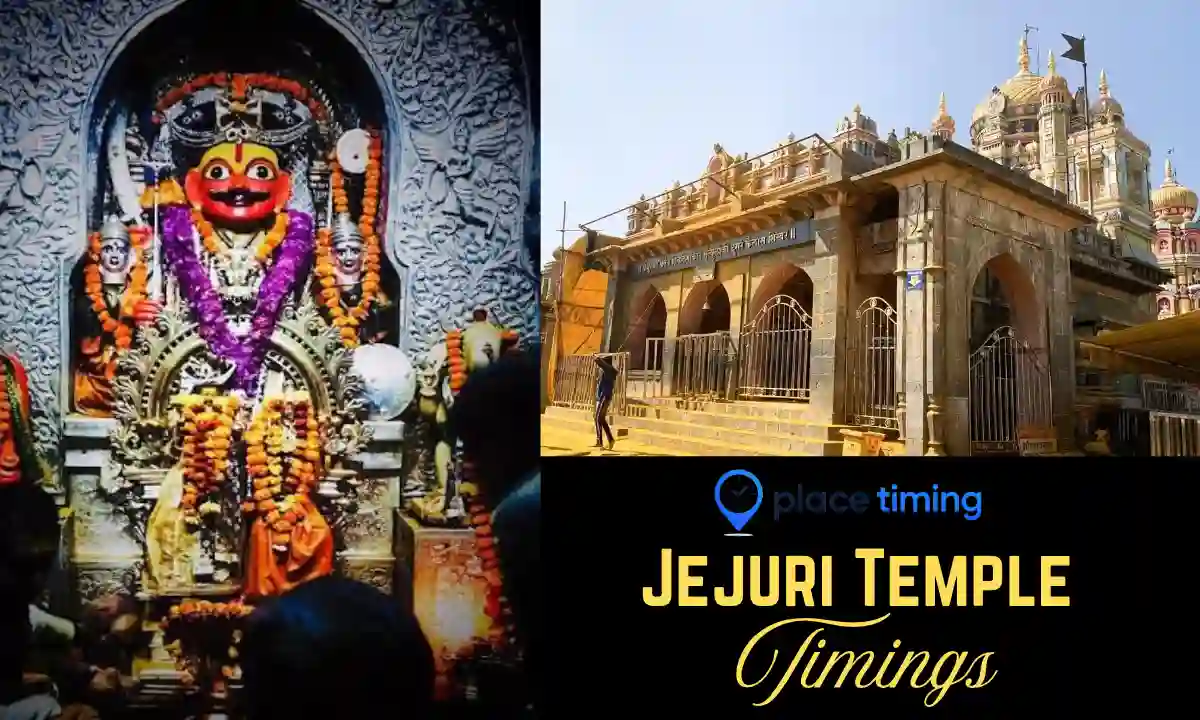
A hill temple of Maharashtra, which is truly magnificent and awe-inspiring, is the Khandoba temple in Jejuri hill, known for its golden color caused by pouring turmeric on it by devotees. If you intend to pay a visit here, then note that the jejuri temple timings are rather liberal, though there is a gap in the darshan during the noon, and a long staircase that one needs to ascend. This article will tell you all about the jejuri temple timings, aarti timings, and the turmeric bhandara that make Jejuri so special.
Jejuri Temple Timings at a Glance
Before the detail, here is the quick picture most visitors are looking for, answered in plain terms.
| What you want to know | The short answer |
|---|---|
| What time does the temple open? | Early, around 5:00 AM, with the first aarti by 6:30 AM |
| When does it close for the day? | Around 9:00 PM, after the final Shej Aarti |
| Is there a gap in darshan? | Yes, roughly 12 noon to 1 PM for the midday offering |
| How many steps to the top? | Nearly 200, past 18 arched gateways |
| What is Jejuri most famous for? | The bhandara, turmeric thrown until the hill turns gold |
| When is the big turmeric festival? | On Somvati Amavasya, a no-moon Monday |
| Best time for a calm visit? | Early on a weekday morning, October to March |
Jejuri Darshan Timings Explained
The temple is open for a good part of the day, generally from 5:00 AM to 9:00 PM. The timings of Darshan occur in two shifts: the first one between 6:30 AM and 12:00 noon and the second between 1:00 PM and 8:45 PM. The time between noon and 1:00 PM is reserved for naivedya and mahaprasad (the offering of food to Khandoba), so plan your visit accordingly. Most days the timing works fine and you do not have to hurry, but on the days of festivals it is different, as we shall see.
Aarti and Pooja Schedule
If you want to time your visit to catch the rituals, which many devotees do, here is how the day of worship unfolds at the temple.
| The ritual | What happens | When it takes place |
|---|---|---|
| Bhupali and morning aarti | The day’s first worship wakes the deity | 5:00 AM to 6:30 AM |
| Morning darshan | The shrine is open for devotees | 6:30 AM to 12 noon |
| Afternoon pooja and aarti | Midday worship with the food offering | 12:00 PM to 12:30 PM |
| Evening darshan | Open again once the offering is done | 1:00 PM to 8:45 PM |
| Shej Aarti | The last aarti, before the temple rests | Around 9:00 PM |
Entry, Darshan Passes and Parking
There is no complex process of buying tickets for a regular visit, but a couple of paid alternatives are available for individuals who require a quicker darshan experience or have to park their cars. The above-mentioned fees are based on visitor experience and should be verified with the temple management.
| Your option | What it gets you | Typical cost (confirm on site) |
|---|---|---|
| Regular darshan | The main queue up the steps | No fixed ticket; arrive with time to spare |
| Quick darshan pass | A faster darshan in about 10 to 15 minutes | Reported around Rs.200 |
| Convenience entry | A shorter wait on busier days | Reported around Rs.50 to Rs.100 |
| Parking | Vehicle parking near the base of the hill | Around Rs.100 to Rs.200 |
The Climb: Nearly 200 Steps to Khandoba
Getting to the principal temple involves a lot of climbing. There are about 200 stone stairs that will take you through 18 stone arches. Along the way, you will see a few deepmalas, which are the high stone lamp-towers unique to Jejuri. It is a slow but not too arduous journey, but during festivals, you have to navigate around 450 stone stairs due to various reasons. Please remember to drink plenty of water and stop at the deepmalas, which look magnificent when illuminated.
The Bhandara: Why the Hill Turns Golden
The unique feature of this particular hill temple is the bhandara, which is the turmeric powder that earns this temple its special name of Sonyachi Jejuri. This is the Golden Jejuri. During the main festival, the pilgrims sprinkle turmeric powder in the air above the idol and even among themselves until everything, including the steps, deepmalas, and people around are sprinkled with it, turning everything golden. Turmeric is believed to be a sign of plenty and prosperity, and the idol in the sanctum always remains covered with turmeric.
Who Is Khandoba, the Deity of Jejuri?
Khandoba is also referred to as Malhari Martand and Khanderaya and is the kuladevata, the clan’s guardian deity, of numerous families in Maharashtra. Khandoba is the protector deity in the form of Shiva and is worshiped as the one who slew the demons, Jejuri being the most important place where he is worshiped. It is the chant of Yelkot Yelkot Jai Malhar that echoes through the hills when he is worshiped which makes the chanting together with the smell of the turmeric stick in the mind of every visitor.
A Normal Day vs Somvati Amavasya
The experience at Jejuri changes completely between an ordinary day and a bhandara festival day, so it helps to know which one you are walking into before you plan.
| What to expect | On an ordinary day | On Somvati Amavasya (bhandara) |
|---|---|---|
| How big are the crowds? | Manageable, with short waits | Among the busiest days of the year |
| How long is darshan? | Usually fairly quick | Long queues; plan for a few hours |
| What is the climb like? | Nearly 200 steps at your own pace | Detours can make it feel like 450 |
| What is the atmosphere? | Calm and devotional | Turmeric in the air, the whole hill golden |
| Who is it best for? | Anyone wanting a peaceful visit | Those who want to see the famous bhandara |
Major Festivals at Jejuri
There are a few specific dates in the year which make the place what it is, and if one could plan a visit around them, it is a worthwhile experience.
- Somvati Amavasya: the dark moon day falling on Monday once or twice a year is the primary bhandara event. The idol of Khandoba is taken to the Karha river for a ritual bath in a palkhi procession.
- Champa Shashti: a significant festival celebrated over a span of six days, mid-December each year; it falls on 15th December 2026 and celebrates Khandoba’s conquest of the demons Mani and Malla.
- Somvati and Dasara yatras: important pilgrim events where devotees gather in large numbers to worship their family god.
How to Reach Jejuri
Jejuri is a convenient travel destination from Pune, being the starting point for most travelers to Jejuri.
- By Train: The nearest rail station is Jejuri, which is about 7 km from the temple with autos and transport available to get to the foot of the hill.
- By Road: Jejuri is around 50 km from Pune, and 1.5-hour drive by road with state/private buses regularly plying.
- By Air: The closest airport is Pune Airport, which is around 51 km from Jejuri, with taxis and buses to get there.
Best Time to Visit Jejuri
The best time for visiting this place will be during the cool months of October to March, especially in case of the climb to the temple. In case the intention is to see the turmeric show, then Somvati Amavasya should be considered, as it would be packed. The perfect time for peaceful darshan would be early morning on a weekday, just when the temple opens.
Common Mistakes Visitors Make
- Arriving at noon to find that darshan had taken a pause for the midday offering.
- Overestimated the steps; almost 200 steps on a sunny day will need some water and rest.
- Expected the entire golden bhandara on a regular day when in fact, it happens only during the festival.
- Arrived at Jejuri on Somvati Amavasya but did not spare sufficient time for crowds and queues.
- Reached late and missed out on the tranquility of the early morning darshan.
Quick Tips to Visit Jejuri Temple
- Arrive in the morning darshan session well before noon.
- Pack water for the steps and wear comfortable footwear.
- Carry a little bit of money for parking and possibly for the quick-darshan pass.
- If the bhandara experience is desired, know the dates of Somvati Amavasya Mondays.
- Take your time with the deepmalas on the way up since they are the most picture-worthy point.
Final Take: Jejuri Temple Timings
Jejuri opens its doors for visitors between 5:00 a.m. to 9:00 p.m., with darshan being done in two shifts, and taking a break during noon to prepare the offerings, so the best way is to make the time for early morning or evening darshan. Considering the nearly 200-steps climb, bring along some water and money to pay the parking lot. And if there’s any chance at all, try making your visit coincide with a Somvati Amavasya to witness the golden hue that falls on Khandoba’s hill by a shower of turmeric.
Frequently Asked Questions
What are the Jejuri temple timings?
The temple is open from about 5:00 AM to 9:00 PM. Darshan runs roughly 6:30 AM to noon and again from 1:00 PM to 8:45 PM, with the midday hours used for the naivedya offering. The first aarti is around 5:00 to 6:30 AM and the final Shej Aarti is at about 9:00 PM.
Is the Jejuri temple closed in the afternoon?
There is a short midday gap in darshan, roughly 12 noon to 1 PM, when the food offering to Khandoba is made. The temple does not shut for the day then, but it is best to plan your darshan for the morning or evening session rather than right at noon.
How many steps are there at Jejuri temple?
The climb to the main shrine is nearly 200 steps, passing 18 arched gateways and rows of deepmalas. On busy festival days, detours and crowd routing can make the climb feel closer to 450 steps.
What is the bhandara at Jejuri?
The bhandara is turmeric powder that devotees throw into the air and over one another during the festival, turning the whole hill golden. It gives Jejuri its nickname Sonyachi Jejuri, or Golden Jejuri, and the deity in the sanctum is always smeared with it.
Who is the deity at Jejuri temple?
The deity is Khandoba, also called Malhari Martand and Khanderaya, a warrior form of Lord Shiva. He is the family deity of many Maharashtrian households, and the chant Yelkot Yelkot Jai Malhar echoes across the hill during worship.
When is the best time to visit Jejuri?
The cooler months from October to March are the most comfortable, especially for the climb. For the turmeric festival, visit on a Somvati Amavasya. For a calm darshan, come early on a weekday morning soon after opening.
Is there an entry fee at Jejuri temple?
There is no fixed ticket for the regular darshan queue. Paid options are reported for faster darshan, around Rs.200 for a quick-darshan pass and less for convenience entry, plus parking charges. Confirm the current rates at the temple.
How do I reach Jejuri from Pune?
Jejuri is about 50 km from Pune, roughly 1.5 hours by road with regular buses. Jejuri railway station is about 7 km from the temple, and Pune Airport, around 51 km away, is the nearest airport.
Also read about: Vijayawada Temple Closing Timings, Srisailam Ghat Road Timings, Unjal Seva Timings, Kottiyoor Temple Timings, Thirumanancheri Temple Timings



Leave a Reply