
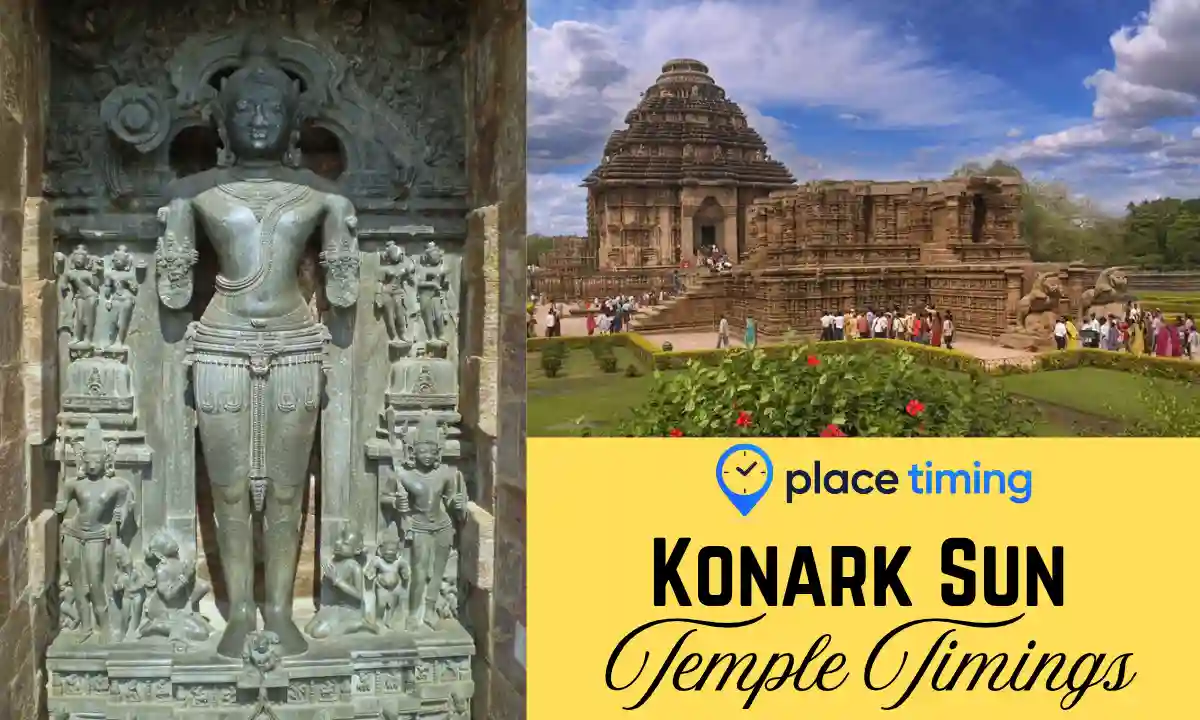
The famous Sun Temple of Konark situated in Odisha is a UNESCO World Heritage Site from the 13th century and resembles the gigantic stone chariot of the sun god. The timings of the temple are daily from 6:00 AM to 8:00 PM, and there is no weekly holiday at the temple, while the popular Light and Sound show takes place during different hours depending on the season whether winter or summer. The entrance is just Rs 40 for Indians, with a separate entry for the show. Online booking saves you from the queue. Remember that it is a monument and not a worship place. This guide covers the timings, the entry fee, the show, the stone chariot, and everything else for a smooth visit.
Konark Sun Temple Timings: The Short Version
Here comes the essence of it all. Konark Sun Temple timings start at 6:00 AM till 8:00 PM on a daily basis and the place is open all seven days of the week, and the entry fee is Rs. 40 for Indian nationals and Rs. 600 for foreign visitors. This ASI monument situated in Puri district of Odisha follows the below-mentioned timings, except for the evening light and sound show.
| Detail | At a glance |
|---|---|
| Open | 6:00 AM to 8:00 PM, daily |
| Weekly closure | None, open all seven days |
| Entry, Indians and SAARC or BIMSTEC | Around Rs 40 |
| Entry, foreign nationals | Around Rs 600 |
| Light and Sound Show | A separate ticket, around Rs 30 extra |
| Best light | Early morning, around 6:00 to 8:00 AM |
| Location | Konark, Puri district, about 35 km from Puri |
Opening Hours and Entry Fee
This facility is open throughout the day from 6am to 8pm, there are no days off, and hence scheduling is not a problem. The cost here is very low, and the prices shown in the table below are the ASI prices for now, but they could change.
| Item | Approximate cost |
|---|---|
| Entry, Indians and SAARC or BIMSTEC nationals | Around Rs 40 |
| Entry, foreign nationals | Around Rs 600 |
| Children under 15 | Free |
| Light and Sound Show | A separate ticket, around Rs 30 extra |
| Booking | Online via the ASI e-ticketing portal or Odisha Tourism |
The tickets for the temple and for the Light and Sound Show are different, and if you need to watch the show, you will need both. I suggest booking tickets on the ASI E-ticketing or the Odisha Tourism websites in order not to queue. It takes about two or three hours to see everything here.
The Light and Sound Show: Winter and Summer Timings
The evening Light and Sound Show is a highlight, and its timing shifts with the season, so this is the key detail to get right. Introduced in 2017, the show brings the temple’s history, architecture, and legends to life with light projection and narration, lasting about forty minutes, with two shows nightly.
| Season | Show timings | Note |
|---|---|---|
| Winter, December to February | About 6:30 PM and 7:20 PM | Earlier, as it gets dark sooner |
| Rest of the year, March to November | About 7:30 PM and 8:20 PM | Later evening shows |
| Duration and language | About 40 minutes | Narration in English, Hindi, and Odia |
Thus, plan your schedule around the performance timings of that particular season and reach there 20-30 minutes in advance as seats get filled up quickly during peak season. The performance charges you about Rs 30 extra apart from the tickets to enter into the temple and its experience concludes the visit to Konark.
The Stone Chariot: 24 Wheels and Seven Horses
It is for all this that makes Konark an architectural wonder of India and requires contemplation. The entire temple is designed in the image of a huge chariot made of stone, the chariot of Surya, the Sun God, pulled by seven horses and having 24 wheels intricately carved.
- The 24 wheels: each about three metres in diameter, and famous is the fact that the wheels act like sundials and hence one can tell the time of day from their shadows.
- The seven horses: drawing the chariot, which are known to depict the seven days of the week, stretching out towards the sun.
- The chariot shape: the entire temple that towers up into the air in the image of the cosmic vehicle of the Sun God.
Do not miss standing before the great wheels and reading the time from their shadow, one of the most remarkable features of any temple in the world.
The Carvings and the Nata Mandir
Apart from the chariots, the temple has some of the best stone carvings in all of India. The temple is covered in sculptures of Hindu deities, dancers and musicians, animals and birds, as well as ordinary human activities that one sees in other temples such as Khajuraho, in addition to the sensuous carvings found at Konark.
- The Nata Mandir or dance hall, which was used for performing dances at the temple.
- The Jagamohana or the great assembly hall, as the tower has partially collapsed over the years.
- Statues of Surya himself, in addition to many other carvings in friezes on the walls.
The detail is worth taking your time to explore, as you should not rush through Konark for photos, or else you will miss its best carvings.
The Mysteries: The Black Pagoda
Among the many elements that have made Konark famous over the years is its aura of mystery.
- The Black Pagoda: This is one of the names that Europeans gave to the temple, distinguishing it from the White Pagoda of the Jagannath Temple at Puri.
- Floating idol story: It is believed that the presence of an enormous magnet on top would make the idol of the presiding deity float in the air and that the rays of the sun would reach the holy shrine and illuminate the diamond on the idol.
- The fall: The cause of the fall of the main tower of this temple still remains a mystery.
No matter whether these stories are myth or facts, they only add more magic to the grand chariot of the Sun.
A Bit of History: The Chariot of the Sun
This temple was constructed in the mid-13th century, in 1250 AD, by King Narasimhadeva I from the dynasty of Eastern Gangas as a dedication to Surya, the Sun God. The name Konark is derived from two words, Kona, meaning corner, and Arka, meaning the sun.
Constructed in the classical style of Kalinga, or of Odisha, it was an architectural wonder of that time and although the main tower is in ruins today, the rest of the edifice stands out as one of the best specimens of temple architecture in India.
A Monument, Not an Active Temple
An important consideration is to set the tone. Konark is an archaeological monument, not a functioning temple of worship; therefore, one should not come here expecting darshans, poojas, or other rituals that one would conduct in a functioning temple.
The place is visited for its architecture and heritage, not for worship, and hence the environment is different from a functioning temple. The dress code is flexible, and one can wear jeans, unlike a functioning temple. This understanding will help you enjoy Konark, which is one of the masterpieces of Indian art and architecture.
Best Time to Visit and Photography
- October through March: cool weather season that makes exploring a breeze, sans coastal humidity.
- Morning hours from 6:00 to 8:00 am: ideal lighting for wheels and carvings, and sunrise without a lot of tourists around.
- Blue hour after sunset: perfect time for the temple, as floodlights turn on.
- Weekdays compared to weekends: for clear photographs of one of the most visited places.
In terms of photography, handheld cameras and DSLRs are okay, but using tripods and gimbals requires a permit and fee at the entrance. Flying drones is not allowed in the complex at all. Don’t touch and don’t climb the sculptures, and bring plenty of water and sun protection, because stone floors get very warm during the daytime.
Konark in the Odisha Golden Triangle
Konark is one of three great sights that form Odisha’s Golden Triangle, so it helps to see them together.
| Sight | Where | Known for |
|---|---|---|
| Konark Sun Temple | Konark | The 13th-century stone chariot, a UNESCO monument |
| Jagannath Temple | Puri | The great living temple and the Rath Yatra |
| Bhubaneswar temples | Bhubaneswar | The temple city, with Lingaraja and many shrines |
| Together | Coastal Odisha | The Puri, Konark, Bhubaneswar Golden Triangle |
The truth of the matter is this. Puri Jagannath temple is the living pilgrimage site, Bhubaneswar is the temple town, and Konark is the heritage site, the chariot of the Sun God built in stone. Tourists tend to combine the three, most times settling either in Puri or Bhubaneswar.
Pros and Cons: An Honest Assessment
Weighing both sides helps set expectations.
The pros:
- UNESCO World Heritage Site and one of India’s finest monuments.
- The remarkable stone chariot with sundial wheels and seven horses.
- Open all days without weekly break and low admission.
- An amazing light and sound show in the evening.
- Part of the Odisha Golden Triangle including Puri and Bhubaneswar.
The cons:
- It is a monument rather than a functioning temple, hence no worship or darshan.
- There is a collapse of the main tower, and hence, in part, it is a ruined structure even though grand.
- Hot, humid, and overcrowded during summer and in the middle of the day.
- A photography permit will be required to use tripods, and drones are not allowed.
- It is approximately 35km away from Puri and 65km away from Bhubaneswar.
Common Mistakes to Avoid
- Making Konark just another photo point without seeing its best sculptures.
- Arriving in mid-morning in the heat of the summer season without water, sunscreen, and proper shoes.
- Thinking of the temple as active with religious services when it is only a historical site.
- Missing out on the Light and Sound Show or getting wrong timings for winter and summer season.
- Using a tripod without permission or using a drone, which is prohibited.
- Touching or climbing the sculptures, which damages the centuries-old sandstone.
Is It Worth Visiting? Who It Suits
Yes, Konark is a definite must-visit, and it fits almost all travelers.
- Good for: everybody who is traveling to Odisha, because of being one of India’s best heritage sites.
- Excellent for: those interested in history and architecture, attracted to the chariots and carvings.
- Best for: photographers, particularly during the sunrise and “blue hour.”
- Ideal for: people traveling through the Golden Triangle of Puri-Konark-Bhubaneswar.
The experience of a first-time traveler to Odisha seeing the time on the sundial wheels and observing the carvings in the early morning and the Light and Sound Show in the evening would be among the most unforgettable experiences in eastern India.
How Long to Spend and How to Reach
A complete visit, covering the temple, the museum, and the grounds, takes about two to three hours, more for a detailed look, plus the evening for the show. Konark is easy to reach from Puri and Bhubaneswar.
| Mode | Details and distance |
|---|---|
| From Puri | About 35 km, roughly an hour by taxi along the scenic coastal road, or by bus. |
| From Bhubaneswar | About 65 km, roughly an hour by road, with the airport there. |
| By bus | OSRTC and private buses run from Puri Bus Stand, about 90 minutes. |
| By train | Puri railway station is the nearest, about 30 to 35 km away. |
A taxi from Puri along the coastal road is the most comfortable option, and the drive itself is scenic. Bhubaneswar, with its airport, is the other common base, and buses run frequently from Puri.
Nearby Attractions: What to Combine With Your Visit
Chandrabhaga Beach: the holy beach located around 3 km from here, where devotees take their dip on Magha Saptami.
- Puri: The Jagannath temple and the Puri beach, situated at a distance of around 35 km.
- The Marine Drive: the picturesque road connecting Puri to Konark along the coast.
- Bhubaneswar: The temple town for a more complete Odisha Golden Triangle itinerary.
An oft-repeated itinerary involves a visit to Konark along with the Jagannath temple of Puri and the beach and the picturesque Marine Drive.
Trivia and Lesser-Known Facts: Konark Sun Temple
- The entire temple is constructed as a chariot for the Sun God, which has 24 wheels and seven horses.
- The huge wheels serve as sundials to tell time through the shadow.
- It was referred to as the Black Pagoda by the Europeans since it was used for navigation.
- It was constructed in 1250 AD by King Narasimhadeva I from the Eastern Ganga dynasty.
- The word “Konark” comes from “Kona,” meaning corner, and “Arka,” meaning sun.
- It is a World Heritage Site and not a functional worshiping place anymore.
Quick Tips: Making Your Konark Sun Temple Timings Work
- Schedule for 6:00 AM to 8:00 PM, open every day with no weekly closed day.
- Arrive early from 6:00 to 8:00 AM for the best lighting and crowd avoidance.
- Make sure you get a Light & Sound Show ticket separately and know their timings for the winter and summer shows.
- Book your tickets online through ASI or Odisha Tourism to avoid long queues.
- Have water, sunscreen lotion, and proper footwear for hot stone floors.
- Make your trip with Puri and Bhubaneswar to form Odisha’s Golden Triangle.
Final Take: Planning Your Konark Sun Temple Visit
Timings of Konark Sun Temple are from 6:00 am to 8:00 pm daily without any closed days and cost is Rs 40 per person for Indians and Rs 600 for foreigners and children below 15 years are free and tickets are available online via ASI and Odisha Tourism to avoid the long lines. The Evening Light and Sound Show which comes separately with a ticket price of Rs 30 takes place at 6:30 and 7:20 pm during winter and 7:30 and 8:20 pm during other seasons.
Visit early during cooler seasons to get good light of grand stone chariot, sundial wheels of 24 and seven horses and also enjoy the exquisite sculptures and Nata Mandir but remember that it is not an operational temple but just a monument of heritage. Take adequate supply of water and protection from the sun and follow the photography guidelines while visiting Konark and also visit Jagannath temple of Puri and Bhubaneswar to form the Golden Triangle of Odisha. As one of the magnificent architectural and artistic structures of India, the visit to Konark will be memorable. Confirm the timings and entrance charges before visiting.
Frequently Asked Questions
Konark Sun Temple visiting time?
This temple is open from 6:00 AM to 8:00 PM daily without any break. It has the best light at dawn between 6:00 AM to 8:00 AM. The Light and Sound show in evening time is also separately run, so its visiting time is subject to change during festival time. It generally takes around 2 to 3 hours.
How much is the entry fee of Konark Sun Temple?
Its entry fees are INR 40 for Indians and people of SAARC/BIMSTEC countries and INR 600 for foreign tourists. The entry for children up to 15 years old is free of cost. You will need another Rs 30 for Light and Sound Show separately. You can book the ticket online through ASI website or Odisha Tourism.
What are the Konark Light and Sound Show timings?
There are two shows nightly. In winter, December to February, they run at about 6:30 PM and 7:20 PM, and the rest of the year, March to November, at about 7:30 PM and 8:20 PM. Each lasts about 40 minutes, with narration in English, Hindi, and Odia. Arrive 20 to 30 minutes early, as seating fills fast.
Is Konark Sun Temple closed on any day?
No, Konark Sun Temple is open all seven days of the week with no weekly closure, from 6:00 AM to 8:00 PM. Timings may change only on special festivals or exceptional administrative closures, so confirm before travelling, especially around festivals.
What is special about the Konark Sun Temple wheels?
The temple is designed as the Sun God’s chariot with 24 intricately carved stone wheels, and famously, the wheels function as sundials, so you can tell the time of day by the shadow of their spokes. Seven stone horses pull the chariot, said to represent the seven days of the week.
Is Konark Sun Temple an active temple?
No, Konark is a protected archaeological monument and UNESCO World Heritage Site, not an active Hindu temple with worship, so there is no darshan, pooja, or ritual. It is visited for its architecture, history, and beauty, with a relaxed dress code, jeans permitted, unlike a living temple.
What is the best time to visit Konark Sun Temple?
October to March is the cool, pleasant season, best for exploring without the coastal humidity. Early morning, 6:00 to 8:00 AM, gives the best light on the wheels and fewer crowds, and the blue hour after sunset is lovely as the floodlights come on. Weekdays are best for photography.
How do I reach Konark Sun Temple?
Konark is about 35 km from Puri, roughly an hour by taxi along the scenic coastal road or by bus, and about 65 km from Bhubaneswar, which has the airport. OSRTC and private buses run from Puri Bus Stand in about 90 minutes, and Puri railway station is the nearest, about 30 to 35 km away.
Also read about: Narayanavanam Temple Timings: Darshan, Kalyanotsavam and Full Guide



Leave a Reply