
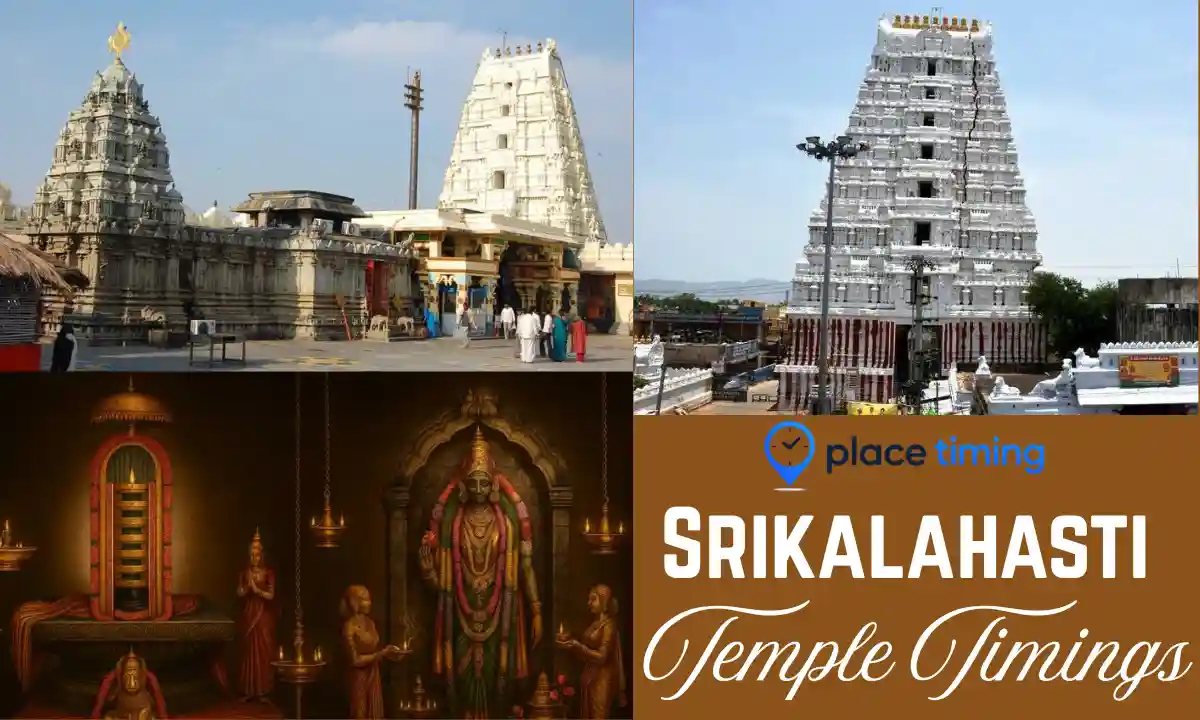
Srikalahasti temple, the Sri Kalahasteeswara Swamy temple situated in Tirupati, is one of the Pancha Bhoota Sthalams where Lord Shiva is worshipped as the Vayu Lingam, which refers to the air element. The Rahu-Ketu Dosha Nivarana Pooja at the temple is the most renowned in the whole of India. The opening time of the temple is early and the darshan goes till late nights; the darshan here is free, and the Rahu-Ketu pooja can be performed in the day’s Rahu Kalam period, which is different each day. There is no booking of the pooja online, so beware of fake websites. This guide covers the timings, the pooja, the Rahu Kalam, and everything else.
Srikalahasti Temple Timings: The Short Version
Here is the core of it. Srikalahasti temple timings are usually from 6:00 AM to 9:00 PM for general darshan, with the temple opening time being 5:30 AM and the Rahu-Ketu Pooja taking place throughout the day. This Vayu Lingam temple, located in Srikalahasti, which is around 36 km from Tirupati, Andhra Pradesh, works on the following timings.
| Detail | At a glance |
|---|---|
| Temple opens | 5:30 AM |
| General darshan | About 6:00 AM to 9:00 PM |
| Rahu-Ketu Pooja | Through the day, best in the Rahu Kalam window |
| Abhishekam slots | 6:00 AM, 7:00 AM, 10:00 AM, and 5:00 PM |
| General darshan cost | Free; special darshan around Rs 200 to Rs 500 |
| Rahu-Ketu Pooja cost | Around Rs 500 single, Rs 2,500 couple |
| Location | Srikalahasti, about 36 km from Tirupati, Andhra Pradesh |
Temple Timings and Darshan
The temple’s opening time is half past five in the morning, while general darshan is available from six in the morning until nine in the evening. The timings remain relatively unchanged throughout the year except during festival days. The ceremony of abhishekam, which involves bathing the lingam, takes place at fixed times of 6:00 AM, 7:00 AM, 10:00 AM, and 5:00 PM.
The general darshan facility remains free of charge, while waiting times depend upon weekdays when it is usually 45-60 minutes, weekends when it increases up to one-two hours, and on festival days when waiting period becomes two-three hours and even more. A paid general darshan facility, costing between Rs 200-Rs 500, along with darshan of inner sanctum, Antharalaya, is also available. There is some information regarding morning and evening darshan, so it would be better to verify the actual timing of darshan.
Darshan Prices and the Booking Scam to Avoid
Knowing the costs and the booking rules saves both money and trouble. The figures below are indicative and revised over time, so confirm at the counter.
| Darshan or pooja | Approximate cost |
|---|---|
| General darshan | Free |
| Special darshan | Around Rs 200 to Rs 500 per person |
| Rahu-Ketu Pooja, single devotee | Around Rs 500 |
| Rahu-Ketu Pooja, couple | Around Rs 2,500 |
| Rahu-Ketu Pooja, premium couple | Around Rs 5,000, better seating |
Importantly, all poojas and sevas should be booked at the temple counter itself using cash on the same day you visit the temple. However, only certain sevas can be booked online via the AP Temples portal. There are no third party bookings available for the Rahu-Ketu Pooja and hence, any website that offers booking for a paid pooja slot is a scam. Don’t make any payment to any such website or third party agent.
The Rahu-Ketu Pooja: The Great Draw
This is precisely why people visit Srikalahasti Temple, and one should learn about it in detail. Being a Vayu Lingam, this temple is the most famous place in India to carry out the Rahu-Ketu Dosha Nivarana Pooja because the shadow planets Rahu and Ketu are known to be related to the element of air in Vedic astrology and the power of Vayu Lingam can counterbalance their effects.
- People come here with problems usually associated with Rahu-Ketu or Kala Sarpa dosha including problems with marriage and careers and unaccountable health issues.
- You have to purchase the pooja ticket at the counter; and the priests conduct the ritual irrespective of your gotra, nakshatra, and rashi.
- Post pooja, the devotees carry the Rahu and Ketu idols in their hands close to their chest and proceed towards Vayu Lingam darshan without even looking back.
- Later, these idols are immersed in the Swarnamukhi River.
Although the pooja makes no promises, it is believed that those seeking liberation from Rahu-Ketu doshas should visit the Srikalahasti temple to conduct the pooja. Please keep in mind that this is not done on Maha Shivaratri day and that Amavasya and eclipses are auspicious days.
Rahu Kalam by Day: The Most Auspicious Window
This is the most crucial factor for conducting the pooja, and since it varies from one day to another, you may as well get it right. Rahu Kalam is an approximately 90 minute period of the day that is regarded as the most auspicious time for carrying out the Rahu-Ketu pooja.
| Day | Rahu Kalam window | Note |
|---|---|---|
| Monday | About 7:30 AM to 9:00 AM | Reach early to secure a slot |
| Tuesday | About 3:00 PM to 4:30 PM | Afternoon window |
| Wednesday | About 12:00 PM to 1:30 PM | Midday window |
| Thursday | About 1:30 PM to 3:00 PM | Early afternoon |
| Friday | About 10:30 AM to 12:00 PM | Late morning |
| Saturday | About 9:00 AM to 10:30 AM | Morning window |
| Sunday | About 4:30 PM to 6:00 PM | Late afternoon |
Therefore, give this information to the priest behind the counter about your day’s Rahu Kalam, and schedule your pooja in that period of the day for an auspicious result. The pooja is carried out during the day, but in this period, it is considered to have the best effect.
The Vayu Lingam and Pancha Bhoota Significance
The knowledge of the deity adds more value to the tour. Lord Kalahasteeswara is the presiding deity of the shrine who is worshipped in the form of Lord Shiva as Vayu Lingam, which stands for Vayu, the air element, one of the five prime elements in nature.
Srikalahasti is one of the five Pancha Bhoota Sthalams, the temples associated with the five elements, and it is the only temple located outside Tamil Nadu. One of the most recognizable features of the air element is the flickering lamp before the sanctum in the closed chamber. It is situated on the banks of the Swarnamukhi River and holds significance of Dakshina Kailasam, the Kailasa of the South, and as Kashi of the South.
The Five Pancha Bhoota Sthalams: Where Srikalahasti Fits
Since it is one of the five element temples, it helps pilgrims to see them together.
| Temple | Element and where | Deity |
|---|---|---|
| Srikalahasti | Air, Andhra Pradesh | The Vayu Lingam, for Rahu-Ketu pooja |
| Ekambareswarar, Kanchipuram | Earth, Tamil Nadu | The Prithvi Lingam |
| Jambukeswarar, Thiruvanaikaval | Water, Tamil Nadu | The Appu Lingam |
| Arunachaleswarar and Chidambaram | Fire and Space, Tamil Nadu | Tiruvannamalai and the Nataraja |
This is what the reality of the situation is like. The five Pancha Bhoota temples altogether symbolize earth, water, fire, air, and sky; and the temple of Srikalahasti stands for air and is the only air temple of Andhra Pradesh, which is known for its Rahu-ketu worship. Many devotees desire to visit all the five and Srikalahasti near Tirupati is easily approachable.
Combining With Tirupati
The best part about Srikalahasti is that it is very near to Tirupati, and thus pilgrims usually go to both these temples together. It is just 36 km away from Tirupati, which houses the shrine of Lord Venkateshwara. The typical route would be going to Srikalahasti to worship the Vayu Lingam and perform the Rahu-Ketu pooja, and to Tirumala to perform the darshan of Balaji.
So, while going to Tirupati, make sure you include a visit to Srikalahasti too, and while going for the pooja at Srikalahasti, don’t forget to visit Tirumala for a darshan of Balaji.
Best Time to Visit
- In the early morning, from the time of opening: the most tranquil and cool period for a peaceful darshan as well as for a pooja time slot.
- The Rahu Kalam of your day: the most favorable time for performing the Rahu-Ketu pooja.
- Weekdays, excluding festivals: less crowded compared to weekend days, Mondays of Sravana and festivals.
- Amavasya days and eclipse days: very effective days for the pooja, but very crowded.
For a peaceful experience, arrive early during weekdays and make sure your pooja takes place during Rahu Kalam. For most effective periods, Amavasya and eclipses are highly respected, although the crowd may be huge.
Pros and Cons: An Honest Assessment
Weighing both sides helps you plan.
The pros:
- The most prominent Rahu-Ketu dosha pooja temple in India.
- One among the five holy Pancha Bhoota Sthalams, the temple of air.
- General darshan is free, while special darshan and pooja are economical.
- Just 36 km away from Tirupati and easily combinable with a Balaji visit.
- An ancient and highly revered Shiva temple situated on the banks of the Swarnamukhi River.
The cons:
- No pooja bookings online, hence be cautious about fake websites.
- Rahu Kalam times change every day, therefore it requires proper planning.
- There are long lines on weekends, Sravana Mondays, and during festivals.
- The timings reported differ slightly, and therefore they require verification.
- Agencies outside the temple are misleading, hence should use the official counters only.
Common Mistakes to Avoid
- Booking a website for the Rahu-Ketu pooja timings, even though there is no third party site to book from.
- Performing the pooja without considering the auspicious time of Rahu Kalam.
- Coming on Sravana Monday or festival days for a darshan.
- Depending on other people outside the temple instead of the temple counters.
- Not having cash with you while you purchase the pooja tickets in cash.
- Performing the pooja on Maha Shivaratri where the pooja will not be done.
Is It Worth Visiting? Who It Suits
Yes, Srikalahasti is definitely worthwhile and suits some people very well.
- Important for: people looking for the Rahu-Ketu dosha pooja, and followers of Lord Shiva.
- Ideal for: people making pilgrimages to the five Pancha Bhoota Sthalams.
- Suitable for: people who have particular problems with Rahu and Ketu.
- Convenient for: Tirupati pilgrims because of the proximity of the two places.
For the devotee, especially those having Rahu-Ketu or Kala Sarpa Dosha, going to Srikalahasti for pooja and darshan of the Vayu Lingam is one of the most powerful pilgrimages in south India.
Dress Code and What to Carry
- Wear traditional or modest clothes as is the case at the temple.
- Carry money for the pooja and sevas, which you will purchase at the counter that day.
- Carry minimum baggage, and remove your shoes before entering.
- Be aware of your daily Rahu Kalam, and tell the priest at the counter.
- Purchase prasadam only from the official counters, and not from agents.
Festivals and How Long to Spend
Maha Shivaratri is the biggest festival at the temple, and the Sravana Masam Mondays, or Sravana Somavaram, have large numbers of devotees attending them, with the last one in 2026 falling on 7 September. The Pitru Paksha month, roughly falling in late September through October, is significant from the aspect of tharpanam and ritual offerings.
Darshan requires about an hour during non-busy periods, and there is added duration due to the Rahu-Ketu pooja, so a couple of hours should be taken into account. Many people make a trip to Tirupati along with this visit.
How to Reach Srikalahasti
Srikalahasti is in Tirupati district, about 36 km from Tirupati, on the banks of the Swarnamukhi River.
| Mode | Details and distance |
|---|---|
| From Tirupati | About 36 km, roughly an hour by road, a common pairing with Tirumala. |
| By train | Srikalahasti has its own railway station, with Tirupati nearby. |
| By air | Tirupati airport is nearest, with road onward to Srikalahasti. |
| From Chennai | About 110 km by road, another common approach. |
Most pilgrims reach via Tirupati by road, or by train to Srikalahasti station. Its closeness to Tirupati makes it an easy add to a Tirumala pilgrimage.
Nearby Places to Combine With Your Visit
- Tirupati and Tirumala: The grand Venkateswara Pilgrimage located at a distance of 36 km, the classic combination.
- Bhakta Kannappa Hill: The place of worship of the devout Kannappa situated at a distance of 1 km.
- Swarnamukhi River Ghats: The sanctified riverbanks of the temple.
- Veyilingala Kona Waterfalls: A picturesque waterfall situated at a distance of 8 km.
The popular combination includes Srikalahasti with a Tirumala pilgrimage trip along with Swarnamukhi ghats and Bhakta Kannappa Hill.
Trivia and Lesser-Known Facts: Srikalahasti
- This is the Vayu Lingam, which belongs to the five Pancha Bhoota Sthalams and is the only one that is not located within Tamil Nadu.
- This is the top temple in India for performing Rahu-Ketu dosha pooja.
- The flame that burns before the shrine keeps flickering; this is an indication of the element of air.
- This temple is named after the spider, serpent, and elephant that worshiped Lord Shiva here.
- This is Dakshina Kailasam and Kashi of the South.
- This temple is located on the banks of the holy river Swarnamukhi, which is close to Tirupati.
Quick Tips: Making Your Srikalahasti Temple Timings Work
- Plan for general darshan from 6:00 AM – 9:00 PM, and arrive early for a serene experience.
- Schedule the Rahu-Ketu pooja during your day’s Rahu Kalam.
- You cannot pay websites to get a pooja slot, as it cannot be booked elsewhere but at the temple counter.
- Bring cash as the tickets for the pooja are purchased from the counter on that day.
- Visit along with Tirupati, which is just 36 km away from here.
- Avoid Sravana Mondays and festivals for faster darshan.
Final Take: Planning Your Srikalahasti Temple Visit
The timings of Srikalahasti Temple range from 6:00 AM to 9:00 PM for darshan and the temple opens at 5:30 AM with abhishekam done at specific intervals and darshan is free with an additional charge of Rs 200 to Rs 500 for special darshan. The highlight of Srikalahasti temple is its Rahu-Ketu Dosha Nivarana Pooja that can be conducted in Rahu Kalam during the day, which varies every day.
Buy the ticket for the pooja, either Rs 500 for a single ticket or Rs 2,500 for the couple’s, at the counter using cash, as third-party bookings are not possible and such websites that claim to provide third-party bookings are fraudulent. Visit early to have a peaceful darshan, make sure you arrange the pooja during the Rahu kalam, don’t hire any guides, and plan the trip to visit both Tirupati and Srikalahasti, which is just 36 kilometers away from here. As the air temple among the five holy Pancha Bhoota temples, and also the prime destination for Rahu-Ketu pooja, Srikalahasti is a very powerful pilgrimage site.
Frequently Asked Questions
What are the Srikalahasti temple timings?
The temple opens at 5:30 AM, with general darshan from about 6:00 AM to 9:00 PM, mostly stable through the year with minor festival changes. Abhishekam slots are 6:00 AM, 7:00 AM, 10:00 AM, and 5:00 PM. Some sources describe a morning and evening session, so confirm the current schedule, and come early.
What are the Rahu Ketu Pooja timings at Srikalahasti?
The Rahu-Ketu Pooja is performed through the day, and is believed most effective in the day’s Rahu Kalam window, which changes daily, for example about 7:30 to 9:00 AM on Monday and 10:30 AM to 12:00 PM on Friday. Tell the priest your day’s Rahu Kalam at the counter, and time your pooja for it.
How much does the Rahu Ketu Pooja cost at Srikalahasti?
It is around Rs 500 for a single devotee, Rs 2,500 for a couple, and about Rs 5,000 for a premium couple with better seating. All tickets are bought at the temple counter in cash on the day. There is no third-party online booking, so any website offering paid pooja slots is a fraud.
Is there an entry fee at Srikalahasti temple?
General darshan is free, with a paid special darshan around Rs 200 to Rs 500 per person, and an inner sanctum darshan available. The Rahu-Ketu pooja and sevas carry their own charges, bought at the counter in cash. Only selected sevas can be booked online via the official AP Temples portal.
What is special about Srikalahasti temple?
It is one of the five Pancha Bhoota Sthalams, worshipping Lord Shiva as the Vayu Lingam, the air element, the only one outside Tamil Nadu, marked by a lamp that constantly flickers. It is the foremost temple in India for the Rahu-Ketu dosha pooja, and is revered as the Kashi of the South.
Can I do the Rahu Ketu Pooja without knowing my Gotra or Nakshatra?
Yes. If you do not know your Gotra, Janma Nakshatra, or Janma Rashi, the priests can still conduct the pooja and guide you through the whole process. After the pooja, you hold the silver Rahu and Ketu idols and take the Vayu Lingam darshan, then immerse the idols in the Swarnamukhi River.
Can I combine Srikalahasti with Tirupati?
Yes, and most pilgrims do. Srikalahasti is only about 36 km from Tirupati, so a common plan visits Srikalahasti for the Vayu Lingam and the Rahu-Ketu pooja and Tirumala for the Balaji darshan on the same trip. Plan the darshan and pooja timings for each.
How do I reach Srikalahasti temple?
Srikalahasti is about 36 km from Tirupati, roughly an hour by road, and has its own railway station. Tirupati is the nearest airport, and Chennai is about 110 km away. Most pilgrims reach via Tirupati by road or by train, making it an easy add to a Tirumala pilgrimage.
Also read about: Golden Temple Vellore Timings: Darshan, the Star Path and Full Guide




Leave a Reply